
ANALYSIS | Alberta Tests the Limits of the Notwithstanding Clause
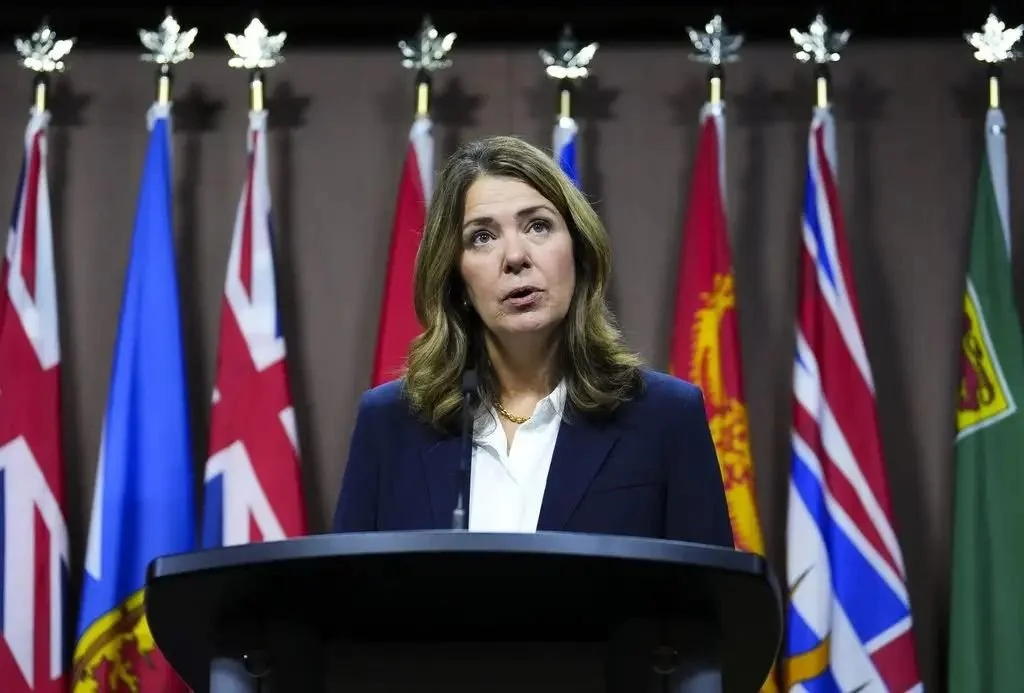
Photo Credit: Sean Kilpatrick/The Canadian Press via Global News
On Oct. 27, Alberta used the notwithstanding clause to force over 50,000 teachers back to work after a 23-day strike. The notwithstanding clause allowed the Alberta government to impose a collective bargaining agreement on teachers that they had previously rejected, and banned all future strike action until 2028.
The notwithstanding clause is part of Section 33 of Canada’s Charter of Rights and Freedoms and states that the provincial government can override some of the rights in the Charter for up to 5 years. It was originally drafted in 1982, following concerns that Canada’s Charter of Rights and Freedoms gave unelected judges too much power and provincial governments too little.
Now, Alberta is using the clause to remove teachers’ constitutional protection for collective bargaining and striking. The legislation, known as the Back to School Act, prohibits the union from striking until August 2028. Teachers face up to $500 per day in fines if they strike, and the union itself could be deducted half a million dollars per day of strike or bargaining action.
Alberta Premier Danielle Smith strongly defended the legislation, as well as the use of the notwithstanding clause. “There are certain decisions that have to be left in the hands of elected people, not [in the hands of] unelected judges, to be able to override the public interest,” she told CityNews. “In this case, we think the public interest was served [...] by getting the kids back in class.”
However, this use of the clause has been criticized as a dangerous government overreach by labour groups, civil rights advocates, and legal organizations. These include the Canadian Civil Liberties Association, former Prime Ministers, and Amnesty International.
Former Prime Minister Jean Chrétien, who originally negotiated the clause’s inclusion, believes that Canada’s premiers have lost sight of the clause’s original purpose, which was to be used only in extraordinary circumstances. “[The clause] was not designed for that,” he told Global News. “It was designed [so that] when there was a court going too far, politicians can intervene.”
However, many applaud this implementation, such as Howard Anglin, the deputy chief of staff to former Prime Minister Stephen Harper. “The Supreme Court of Canada’s unjustified and sometimes whimsical treatment of the Charter as its personal plaything has vindicated the clause’s inclusion in the Charter and justifies its more frequent use,” he wrote in The Hub.
In the first few decades after the clause’s enactment, it was used very sparingly; however, in recent years, the clause has seen an enormous resurgence, of which the Back to School Act is a small part.
In 2018, Quebec used the clause to ban government employees from wearing turbans, hijabs, and kippahs at work. In 2023, Saskatchewan used the clause to prevent transgender students from using their chosen names and pronouns at school without parental consent. Ontario Premier Doug Ford has also attempted to use the clause; however, those attempts were unsuccessful due to significant public pressure.
According to CityNews, a poll released shortly after Alberta’s strike legislation revealed that 51 per cent of Alberta residents consider this use of the notwithstanding clause “inappropriate,” while just 33 per cent support it.
The Alberta Teacher Association (ATA) has filed for an injunction and a full constitutional challenge. Its president, Jason Schilling, called the legislation “a reckless and historic abuse of power.”
Meanwhile, Kathleen Mahoney, a law professor at the University of Alberta, worries that this sets a precedent for abuse of power. “Once you can violate the fundamental rights and freedoms of one group, it’s a slippery slope to going to the next group that you don’t like,” she told CTV.
On Dec. 10, Alberta used the notwithstanding clause again to pass Bill 9, a set of policies centred on transgender youth. The legislation bans gender-affirming medical care, such as puberty blockers, for youth under the age of 16. It also mandates that schools inform parents of their child’s wishes to change their pronouns and name, and prohibits transgender girls and women from participating in school and amateur sports.
Research conducted in the US has examined the impact of similar policies, finding that they significantly worsen mental health outcomes for many youth. A 2024 peer-reviewed Nature study found that anti-trans legislation in US states increased suicide attempts in transgender and non-binary youth by 72 per cent.
Reactions to Bill 9 have been mixed. Supporters of the legislation argue that the measures prioritize parental involvement and preserve fairness in youth sports. However, many human rights groups are speaking out against the bill.
“This political intrusion into evidence-based medicine is both unacceptable and dangerous,” Rainbow Health Ontario wrote in a statement as the bill was undergoing deliberation. “This legislation constitutes an unconscionable violation of human rights that specifically targets trans and gender-diverse youth, effectively normalizing transphobia and discrimination.”