
EDITORIAL | Before the Ballot: Four Key Issues to Follow Ahead of the 2026 VSB Election
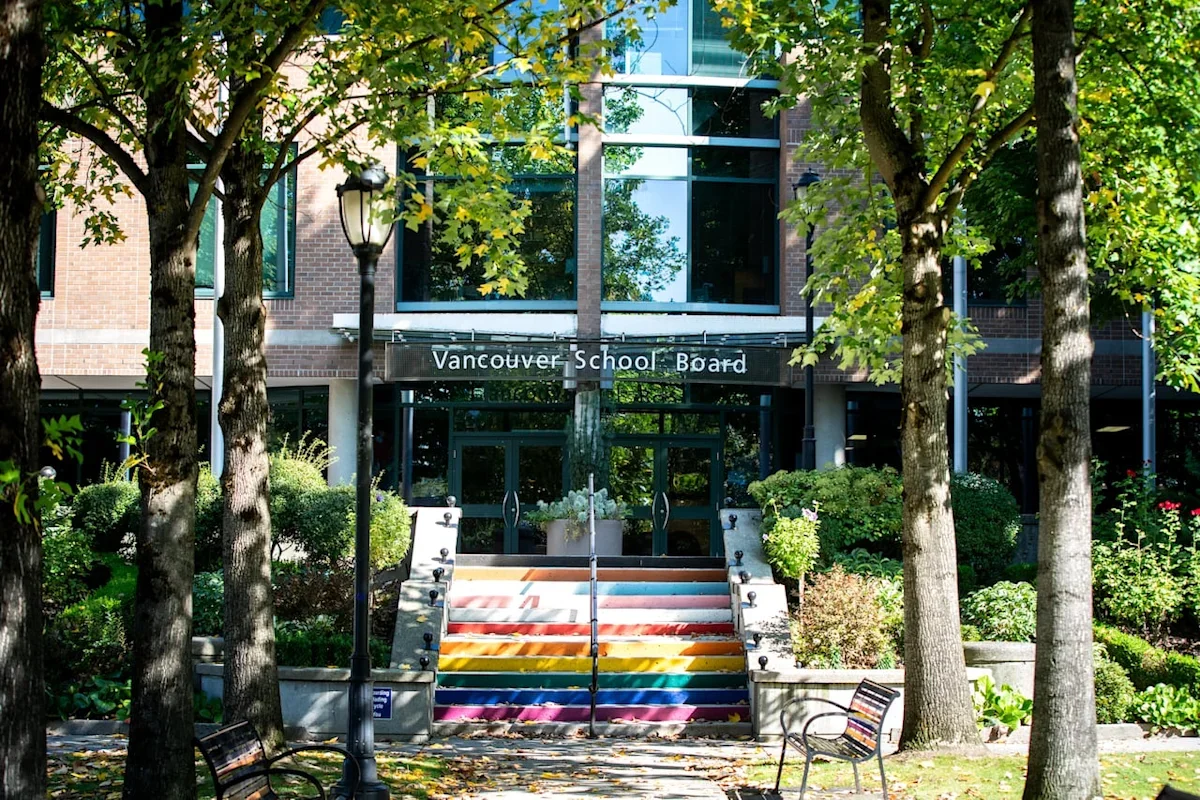
Photo Credit: Justine Boulin/CBC
On Oct. 17, Vancouverites will take to the polls to vote in the 2026 Municipal Election, which includes the highly contested positions of mayor, City Council, and Park Board. However, more voters tend to overlook another key aspect of the election: those running to govern the education of Vancouver’s student population, the Vancouver School Board (VSB) trustee candidates.
VSB trustees are responsible for setting the district’s strategic vision, approving the annual budget, establishing educational policies, and hiring the superintendent. Voters will elect nine trustees to represent public education across the district.
The Nest has highlighted four relevant issues governed by the VSB that affect student experience: artificial intelligence (AI) use in schools, monetary matters, enriched programs, and school capacities. Voters, take notes.
AI In Classrooms
Recently, Copilot 13+ was made available to all VSB students aged 13 and older. Access to Copilot comes through an integration into students’ board-provided Microsoft 365 accounts. In a May 28 email to parents, VSB Associate Superintendent Pedro da Silva stated that Copilot offers a “much more protected environment than other familiar generative AI platforms,” including content filters and protection of users’ data.
On their website, the VSB encourages students to familiarize themselves with the tool, stating that they support “students in developing the judgment to use AI responsibly, ethically and with purpose.”
Additionally, the VSB’s website states that AI can have significant benefits to educators, who could use Copilot to assist with lesson planning and cut hours on administrative tasks.
Utilizing collaboration across the district and input from 138 elementary and secondary educators and 63 secondary students, the VSB published two guidelines for AI usage — AI Guidelines for Students and AI Guidelines for Educators — dated May 27. However, as of Jun. 8, no other specific policies have been publicly released by the VSB about AI usage in schools.
Each of the AI guidelines pages is less than 200 words, and includes mostly general suggestions and vague language, like the recommendation that students “use AI to grow — not to replace [their] thinking.”
Voters will have to decide: to what extent should AI be endorsed by the VSB, if at all? Should trustees be involved in implementing AI policy, or should decisions be left to individual teachers? As AI becomes a more prevalent tool within secondary schools, pay attention to how aspiring policy-makers strike the balance between promoting digital literacy skills and regulating AI platforms.
Fiscal Matters
As the school board enters a period of fiscal strain, the trustees that voters elect in October will have to make some tough financial choices.
Budget pressures will likely become increasingly intense, and provincial funding could remain stagnant. The VSB projects a 330-student decline in enrollment during the 2026–27 school year. This includes the loss of 300 international students, who each pay the VSB $17,000 a year, according to the VSB website. As a result, the VSB may lose out on a total of $5.1 million in international tuition fees.
The VSB currently receives funding from the province for each student enrolled. This funding was allocated at $9,015 per student in 2025–26, and will remain the same in 2026–27, according to The Tyee. However, this represents an effective cut, since inflation has led to rising costs while funding has not increased.
Since school boards in BC are not allowed to run deficits, the VSB must make do with what they have.
Recently, the VSB has seen a significant increase in the amount of money that flows to trustees and senior management staff. On May 27, the current VSB trustees approved large pay increases for the incoming school board.
As per the minutes from the May 27 board meeting, the new board chair will get a salary increase of 34 per cent, from $40,310 to $54,100, and trustees will see a 12 per cent raise, from $37,215 to $41,600.
Furthermore, despite a slight decrease in the total number of students, the number of senior administrators in the VSB has ballooned, according to an analysis from The Tyee. In 2014–15, there were 54,340 students and 24 senior administrators in the district, while in 2024–25, there were 53,077 students and 44 senior administrators.
Not only has the number of administrators increased, but their salaries have gone up as well. In 2024–25, the VSB’s superintendent role was awarded almost $200,000 more than they were making in 2014–15, and positions such as directors of instruction and district principals recieved $40,000 to $50,000 more than they made in 2014–15, according to The Tyee.
However, these increases have come amidst cuts in other areas. In the 2026–27 budget, trustees cut the district teacher librarian position, as well as student support workers at Britannia Secondary and David Thompson Secondary, according to CBC. In the 2025–26 budget, trustees halted a program that provided a wage top-up to contracted staff to ensure that they met the living wage threshold established by Living Wage BC. For example, contracted bus drivers saw their hourly wages fall from $25.68 to less than $20, according to previous reporting from The Nest.
As pressures grow, trustees will have to make more difficult decisions. Should senior staff and trustees’ salaries be prioritized over student support workers? How will the school board make ends meet when costs rise and funding slumps? Voters will have to decide on Oct. 17.
Enrichment Programs
In recent years, the VSB has made several changes to enriched programs, including the cancellation of honours programs in secondary schools and a pause on admissions to the University Transition Program (UTP).
In June 2021, all honours programs were officially phased out of high schools. In the years leading up to the cut, English honours was the first to be removed, followed by science and math courses. The VSB explained that honours programs create inequities between students, and "by phasing out these courses, all students will have access to an inclusive model of education," as per CBC. They added that honours courses don’t have a unique curriculum and “do not provide enrichment,” but instead push students through classes at a faster pace. Additionally, the VSB shared that students who are seeking further enrichment still have mini school programs as an option.
Shortly after, some parents spoke to CBC and voiced concerns that instead of promoting equity, the cuts took away an important learning option for motivated students, especially those who cannot afford out-of-school enrichment opportunities.
In 2024, the VSB, the Ministry of Education, and the University of British Columbia (UBC) paused admissions to UTP, a two-year program for students aged 13–15 years old to fast-track secondary school education and prepare for UBC. UTP paused admissions after concerns were raised about the effects of the program on students’ mental health. Additionally, an external review was conducted on the program by Deetken Insight, a consultancy firm. Some parents considered Deetken Insight unfit to conduct the review, as the firm has no expertise in gifted education or adolescent psychology, as per CBC.
UTP has not announced that admissions for the 2026–27 school year are reopening.
Whether these programs are revived or shut down for good, it could affect thousands of students. Before Oct. 17, voters should weigh the importance of enriched education programs and consider candidates’ views on this matter.
Managing School Capacity
A key responsibility of trustees is facilitating the creation of schools within the district. Capacity issues at certain schools have highlighted the need for new school facilities to be constructed.
According to 2024–25 VSB enrollment records, out of 18 secondary schools and 87 elementary schools (including 10 annexes), there are 26 elementary schools, one annex, and two secondary schools that are overcapacity. Currently, the VSB is set to open two new elementary schools, but has no publicly-known plans to open any high schools.
Plans are in motion to open cəw̓as Ch’elxwá7elch Skwuláw̓txw Seaside Elementary, a new school in Coal Harbour. The school’s purpose is to alleviate long waitlists in nearby catchments, according to CityNews. It will be operational by the 2026–27 school year.
However, Seaside Elementary is experiencing unprecedented waitlists itself — in fact, the highest in the district, as per CityNews. Although the school hasn’t been opened yet, it is already over its capacity of 317 students, with 15 students on the waitlist.
The second new school is being built in Olympic Village, a long-promised project that has been in the works for years. According to the VSB website, the VSB and the City of Vancouver officially planned the project back in 2005.
However, only in 2020 did the NDP make an election promise to officially fast-track the project.
In April 2024, the Ministry of Education approved a $150 million budget to fund the Olympic Village elementary school. In February, City Council approved a rezoning application, allowing the development to move forward.
Construction is set to begin in 2027, and the school is targeted to open in 2029. According to the VSB website, the new school building will have a total capacity of 630 students.
Currently, the catchment school for the Olympic Village neighbourhood is Simon Fraser Elementary, which is 92 per cent over-capacity. Simon Fraser has a capacity of 176 students, but in the 2024–25 school year, 339 students enrolled, according to public VSB enrollment records.
When schools face capacity issues, students, staff, and families ultimately pay the price. Operational money is diverted away from learning services to pay for portables. Families have to travel out-of-catchment to drop their kids off at school. Waitlists leave parents anxious about which school their children will end up attending. Before heading to the polls, voters should follow candidates’ views on school capacity issues.