
Carney Announces New Groceries Benefit Aimed At Fighting Food Insecurity
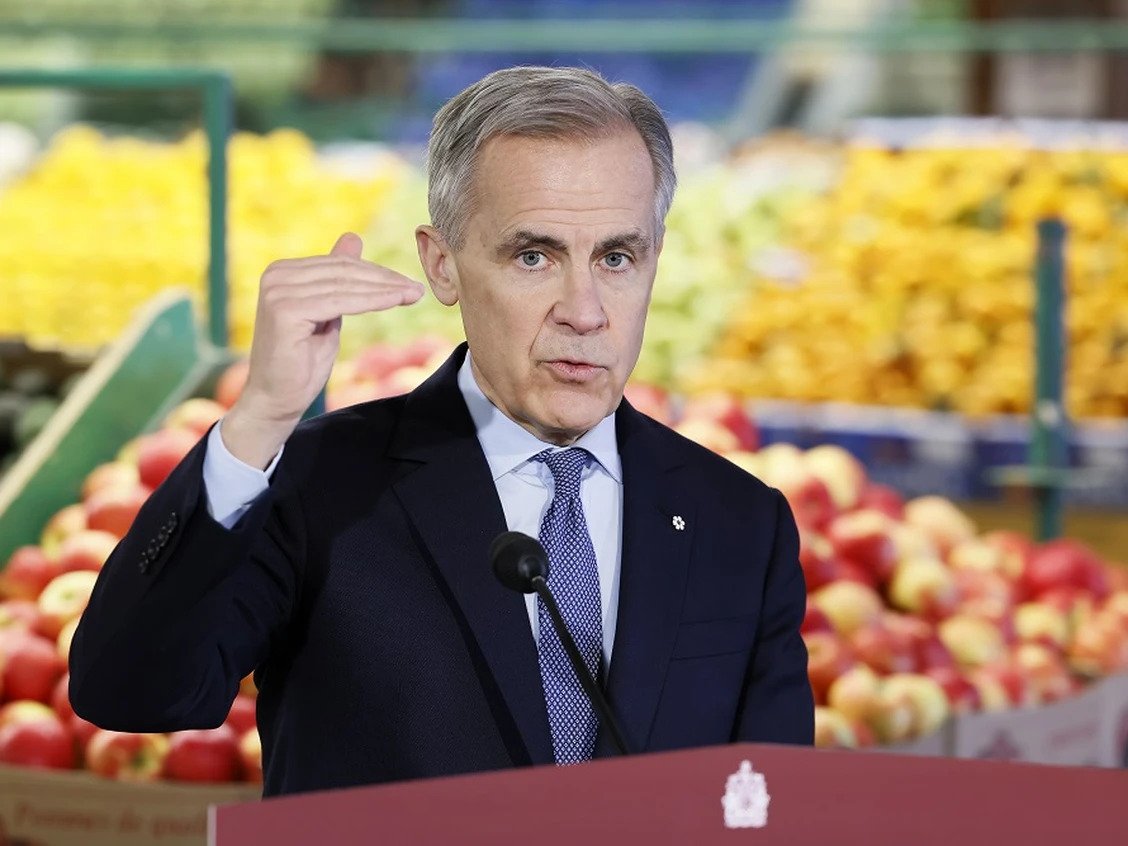
Photo Credit: Blair Gable/Postmedia Network
On Jan. 26, Prime Minister Mark Carney announced the Canada Groceries and Essentials Benefit (CGEB), a new policy aimed at helping Canadians deal with the rising costs of groceries and essential goods. These new policies are a part of a larger affordability agenda that includes financial support to households across Canada and efforts to strengthen food supply chains.
This year, the CGEB will provide families of four with up to $1,890 and single individuals with up to $950, according to the Right to Food, a non-profit focused on addressing food insecurity. However, the level of support given to Canadians will decrease in subsequent years. After the first year, a family of four will receive approximately $1,400 per year for the following four years, and single individuals will receive approximately $700 per year over the same time period, according to the Prime Minister’s Office.
The new government benefit comes as Canadians experience food insecurity on a large-scale basis. According to Food Banks Canada, one in four people in Canada live in food insecure households, and food banks saw nearly 2.2 million visits in March 2025.
Patty Hajdu, Canada’s Minister of Jobs and Families, says the benefit will provide “material financial support for those Canadians who need it the most while the government’s plan to build the strongest economy in the G7 takes effect,” aiming to provide support to 12 million low and modest income Canadians.
“The government is setting aside $500 million from the Strategic Response Fund to help businesses address the costs of supply chain disruptions without passing on those costs to Canadians at the checkout line,” reads a statement from the Prime Minister’s Office.
In addition to providing financial support, the grocery benefit was announced in tandem with other measures intended to strengthen food supply chains. Money from the Strategic Response Fund is meant to stabilize food supply chains and help businesses absorb costs, in turn reducing prices at checkouts.
The CGBE also provides $20 million to the Local Food Infrastructure Fund to ease pressure on food banks.
After the CGEB was passed in Parliament, overall public opinion has been mixed. Supporters view it as a meaningful step to reduce cost-of-living pressures; however, critics within the Conservative Party question whether the benefit goes far enough to address the root causes of food inflation.
“Conservatives have real solutions that could be adopted immediately: repeal the food inflation packaging tax, the industrial carbon tax and the fuel standard that will add 17 cents per litre of gas so that the food Canadians eat can get from field to fork affordably,” Conservative MPs Sandra Cobena and Vincent Ho said in a written statement.