
City Council Passes Budget with Zero per cent Property Tax Increase
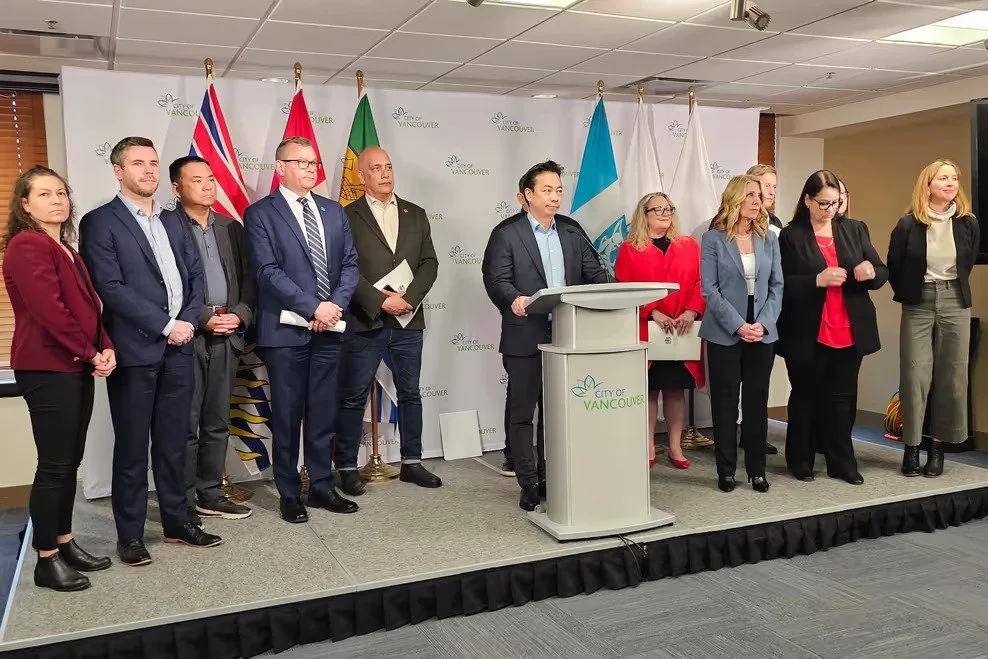
Photo Credit: Kenneth Chan/The Daily Hive
On Oct. 8, Vancouver City Council voted 7–4 to approve a motion from Mayor Ken Sim that would see the city deliver a zero per cent property tax increase for 2026. “We want to be exceptionally clear: zero means zero,” Sim said. “We’re maintaining vital investments in our City’s infrastructure, while giving families and local businesses the confidence they need heading into 2026.”
In the 7–4 vote, all seven councillors of ABC Vancouver voted for the motion, while all four opposition councillors — independent Rebecca Bligh, Pete Fry of the Green Party, Sean Orr of the COPE Party, and Lucy Maloney of OneCity — voted against the motion.
According to a press release from the mayor’s office, Sim introduced his motion after city staff had recommended a 6 to 7 per cent property tax increase earlier in the year. “To achieve the zero per cent tax increase, City staff will identify approximately $120 million in cost savings under the leadership of newly appointed City Manager Donny van Dyk,” the statement reads.
However, many were confused about how the city could find $120 million in cost savings. “While we don’t yet know exactly where the cuts will land, we do know that choosing to cut jobs and services today will have deep and lasting impacts on the quality of life in Vancouver neighbourhoods for years to come. A zero per cent tax increase inevitably means fewer programs, reduced hours, longer wait times, and more pressure on the services people rely on every day,” says a statement from the Vancouver and District Labour Council. According to an ABC Vancouver press release, the zero per cent increase follows several years of responsible budgeting and investment. Previous property tax increases were necessary to fund critical infrastructure renewal, rebuild the city’s reserve funds, and fully resource emergency services. The city’s reserves have grown by 6.8 per cent in tax revenue from when Sim took office in 2022, and for the first time in decades, municipal fire and police services are fully funded.
The budget has seen both positive and negative feedback. Those providing positive feedback include many presidents of local associations, including the Downtown Vancouver Business Improvement Association, the BC Restaurants & Food Services Association, and the Business Council of BC, who have supported and praised the bill. These organizations say that the bill will bring stability and help small businesses.
"This is welcomed news. The zero per cent increase in property tax will help provide Vancouverites and the small business community, a confident financial outlook and stability during uncertain times," said Bo Chen, executive director of BC's Alliance of Beverage Licensees.
On the other hand, opposition councillors, including Pete Fry of the Green Party, called the budget “the leanest document I’ve ever seen for a budget presentation”, describing the draft pamphlet as “barely two dozen pages” compared to the typical “330 to 400 pages. It’s an astounding lack of detail, and it makes it impossible for an informed decision to be made.”
The COPE Party called it “the most opposed budget in Vancouver history.” The Vancouver & District Labour Council created a petition titled “Vancouver Deserves Better: No Means No,” citing major concerns over public services and jobs being cut.
Representatives from multiple Canadian Union of Public Employees (CUPE) locals criticized the bill, with President of CUPE local 15, Santino Scardillo, saying: “Job cuts won't just affect those who are laid off, it will also leave the remaining workers struggling with heavy workloads, reduced morale and a growing fear of what's next. I urge you not to underestimate the weight of this decision, of a ripple effect it will have across our community.”
A statement from CUPE local 1004 read: “A zero per cent tax increase doesn't make Vancouver more affordable, it makes the city less functional. It means longer waits, fewer programs and more pressure on the people who deliver the services, residents, businesses and visitors count on.”
This budget comes after an April by-election to replace two council members who had resigned, in which the ABC Vancouver candidates received the lowest vote share of any non-independent candidates. The budget is also the second last or possibly final budget before the 2026 Vancouver elections.