
Construction For High-speed Rail Project Linking Ottawa and Montreal To Start in 2029
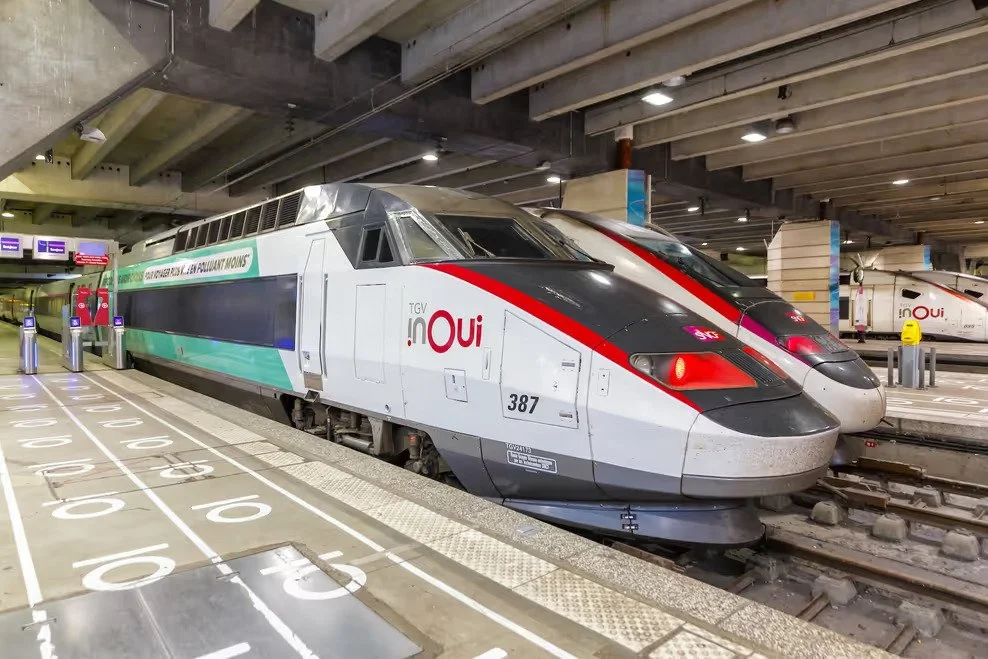
Photo Credit: Markus Mainka/Shutterstock via Daily Hive
On Dec. 12, the federal government released additional info and timelines for the Alto high-speed rail project. Construction on the first phase of the project will start in 2029 on a segment connecting Montréal and Ottawa.
Eventually, the project will span 1,000 km from Toronto to Quebec City. High-speed trains will travel at speeds of up to 300 km/h on dedicated tracks with a system of overhead lines called electrified overhead catenary. Nearly half of Canada’s population will become connected by this high-speed rail, with intermediary stations in Trois-Rivieres, Laval, and Peterborough. Travel times between these cities will be halved. However, there is currently no timeline for the extensions to Toronto and Quebec City.
In January 2026, a three-month-long public consultation will begin. Feedback from local stakeholders will help inform the rail line’s exact route and station locations, and help manage impacts to local communities and create community benefits, according to The Daily Hive.
“This announcement marks an important step forward in delivering faster, cleaner, and more connected transportation for Canadians. By working closely with Alto and our partners across governments and communities, we are laying the groundwork for a high-speed rail network that will put Canada firmly on the global map for modern rail innovation,” said federal transport minister Steven MacKinnon in a statement.
The newly created Crown corporation Alto is responsible for managing the private-public partnership that will ultimately construct the line. The 200 km long Ottawa-Montréal segment will be built first in order to facilitate the construction work.
According to The Daily Hive, high-speed rails are typically built in phases, allowing for the benefits of the project to be demonstrated on a small scale first, which hopefully creates a positive public perception of the project and encourages the government to keep financing construction. Building in phases also allows for design elements to be tested and local know-how in high-speed rail construction to be developed.
“Undertaking one of the biggest infrastructure projects in Canada’s history requires multi-stage planning. Focusing first on the Ottawa-Montréal segment is a logical step to optimize the project, accelerate delivery, and generate tangible local economic benefits,” Martin Imbleau, the president and CEO of Alto, told reporters.
“This approach allows us to mobilize teams even more rapidly in both provinces while continuing work on all other segments of the corridor, from Toronto to Québec City. As consultations begin, we look forward to engaging with communities and hearing their perspectives firsthand,” he added.
According to The Daily Hive, there are other reasons why the Monrtéal–Ottawa corridor is being prioritized. Firstly, two provinces will reap the benefits of the line without delay. As well, this approach allows for construction to start at the same time with different crews in each province, so workers and engineers in both relevant provinces will gain experience in high-speed rail construction.
However, it’s not clear whether construction will be easier in this segment, and whether there’s more available space that could be used to create the new grade-separated right of way required by high-speed rail. The first phase also does not yet have a cost estimate or an anticipated completion date, and neither does the project as a whole.
A previous proposal that covered the same destinations — dubbed High-Frequency Rail — and would have seen trains running at speeds lower than 300 km/h, was estimated to cost $6 billion to $12 billion, although the Alto project will likely cost more.
In fact, the government has already earmarked $3.9 billion for Alto to plan and manage regulatory approval. Originally, pre-construction engineering, regulatory, and permitting work was scheduled to take eight years, but after provisions were made in the November federal budget, Alto is now expected to complete the work in four years.
As well, the budget stated that Alto would fall under the purview of the Major Projects Office, whose role is to dismantle red tape and speed up “nation-building projects” that help boost the economy. The budget also promises that Alto will be helped by yet-to-be-announced “legislative amendments to streamline approval processes and reduce regulatory uncertainties.”
However, some experts have questioned the project’s rollout.
The government’s timeline "doesn’t account for unforeseen things," Leslie Woo, an urban planner and the CEO of CivicAction, told the CBC. "Something like a pandemic can totally throw everything off."
As well, she wondered why the project would only be built between Ottawa and Montréal at first, because the project’s biggest benefits will only happen after Montréal and Toronto — “the largest urban centres with the highest potential for the number of riders” — are connected.
Changes recently made to the Expropriation Act in an attempt to facilitate the federal government’s need to acquire land for the Alto project have also drawn criticism.
“They've taken away safeguards in the interest of time, but I wouldn't say those are just protections for the homeowner,” Shane Rayman, a lawyer specializing in expropriation law, told CBC. “Those safeguards protect both sides against mistakes that are sometimes made in a very complicated process."
However, Transport Canada says the changes are necessary because of “geometric requirements of high-speed rail” that require the line to follow a mostly straight alignment, which results in there being only “a narrow range of technically viable” land to accommodate high-speed rail.