
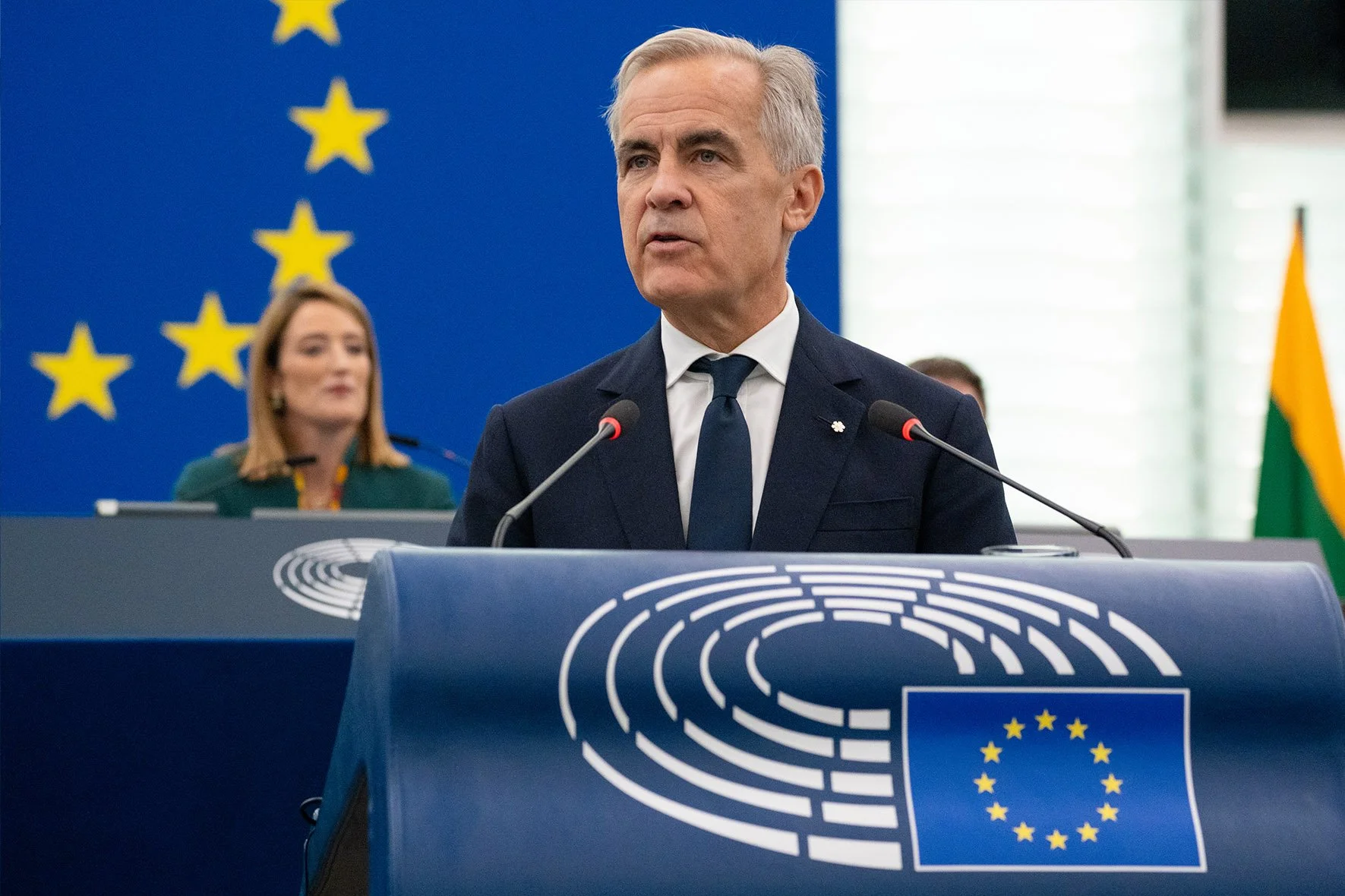
Photo Credit: European Parliament
On Sept. 16, European Commission president Ursula von der Leyen proposed that Canada become an “associate member” of the European Union (EU).
The idea is circulating globally, sparking speculation about what this status could mean for Canada and international relations. BBC News reported that Prime Minister Mark Carney welcomes the EU’s determination to cooperate on issues such as vital minerals, energy security, and defence.
However, the exact framework surrounding an “associate member” remains unclear. While there is currently no such status that exists under EU treaties, the idea of an associate-type membership has gained traction in recent years. Various news outlets continue to question what specific privileges this title would grant, and as per BBC News, the legal process of creating a new status of EU membership could take years to execute.
Canada becoming an associate member of the EU would ultimately serve as a deeper economic and strategic partnership between Europe and Canada.
According to the Government of Canada, Canada and the EU’s relationship stems from shared values and shared strategic policy priorities. The European Parliament notes that Canada has many minerals and other important resources, which act as a primary incentive for deepening ties. Polling from YouGov indicated that many citizens in France, Germany, Italy, Poland, and Spain are supportive of Canada becoming an associate member of the EU.
However, Carney stated that Canada does not have an interest in becoming a full member of the EU, according to CBC News. European Parliament President Roberta Metsola echoed that sentiment, saying, “Europe and Canada share a simple understanding: that we are always stronger when we work together. Canada stood with Europe in our darkest moments, and we will never forget their sacrifice. Today, we are looking to the future together, with huge potential to deepen our cooperation from defence to trade to energy, education and research,” as per the European Parliament’s website.
Domestically, the proposal also faces some opposition. According to the National Newswatch, Pierre Poilievre stated, “Conservatives are clear. While we support free trade and continued NATO co-operation with our European allies, Conservatives say no EU taxes, no EU laws, and no EU open border policies on immigration in Canada.”
Poilievre says that he doesn’t support European taxes, laws and what he called “reckless European-style immigration” being brought to Canada, as per City News.
Currently, Canada cannot officially join the European Union due to Article 49 of the Treaty on European Union, which states that any country applying to be a part of the EU must be European.
Canada is not the only country considering becoming an associate member. German chancellor Friedrich Merz previously floated the idea of temporary EU membership for Ukraine, which would allow them to attend EU summits and meetings. Ukraine ultimately declined due to the lack of voting rights.
Currently, Canada and the European Union share the Canadian European Comprehensive Economic Trade Agreement (CETA). According to the Financial Post, CETA renders roughly 98 per cent of European Union tariffs duty free for Canadian exports.
As per CTV News, President Donald Trump made recent comments regarding the situation. Trump stated that he views the idea of Canada becoming an associate member of the EU as a possible “hostile act,” and he threatened to impose more tariffs on Europe should the partnership advance.