
ICE Deployment To Minnesota Incites Two Fatal Shootings, Country-Wide Protests
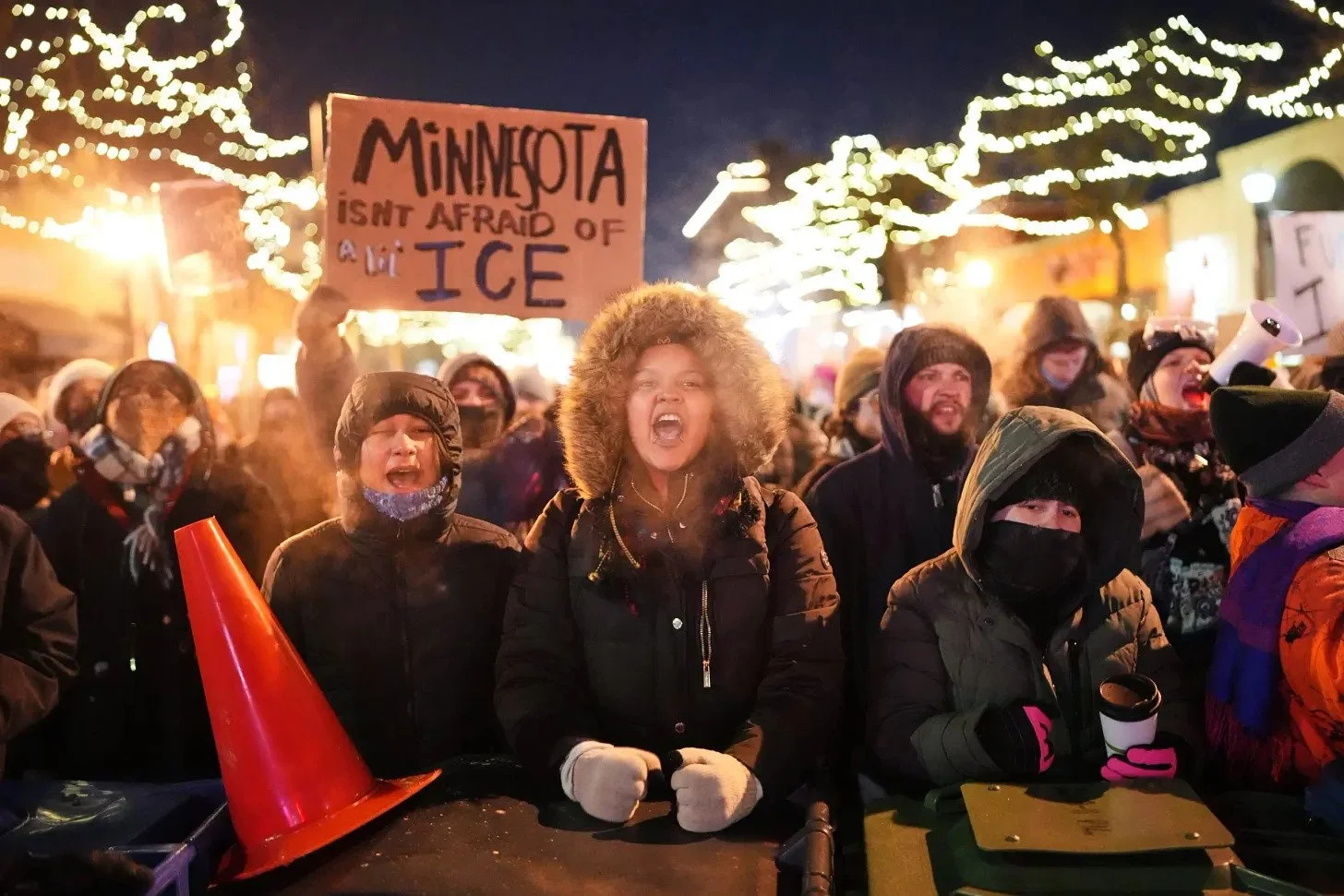
Photo Credit: AP Photo/Adam Gray via Substack
In early December 2025, US President Donald Trump’s administration introduced an immigration enforcement operation in Minnesota’s cities of Minneapolis and St. Paul, deploying thousands of United States Immigration and Customs Enforcement (ICE) agents to the areas. Throughout the deployment, two US citizens were fatally shot by ICE agents. The operation was met with public resistance and protests, with tensions rising due to the presence of the agents.
In the first two weeks of the campaign, ICE arrested hundreds, including many Somali Americans. The arrests followed a series of comments Trump made about the Somali community, where he stated that he does not want them in the US, according to CBC.
Minnesota is home to about 84,000 people of Somali descent, which is the largest population of Somalis in the country. Following the raids and arrests, many Somali Americans reported that they felt scared to be outside.
“There’s people that aren’t leaving their house, because they’re scared of being mistaken for someone else and being captured,” an American citizen and member of the Somali community named Farah shared with CBC.
On Jan. 6, ICE’s presence expanded with about 2,000 more agents deployed across Minnesota. Following this deployment, 37-year-old US Citizen Renee Good was fatally shot by an ICE agent during an enforcement operation on Jan. 7 after refusing to exit her vehicle.
A video of the altercation was widely shared on social media, showing an ICE agent firing multiple shots through the windshield as Good began reversing her car. On social media, US Vice-President JD Vance shared that the shooting was an act of self-defence; however, The Guardian reported that witnesses and protestors believe the footage of the incident does not support that narrative. Good’s death quickly became a focal point of citizen outrage, sparking an increase in protests across the country.
Several days after Renee Good was shot, the State of Minnesota, along with the cities of Minneapolis and St. Paul, filed an official lawsuit, asking the federal court to “end the unprecedented surge of DHS agents into the state and declare it unconstitutional and unlawful,” according to CBS.
“We allege that the surge’s reckless impact on our schools, on our local law enforcement, is a violation of the 10th Amendment and the sovereign laws and powers of the Constitution,” Minnesota Attorney General Keith Ellison said at a Jan. 12 press conference, according to CBS.
The court refused the motion to end the surge, denying Minnesota’s request for a preliminary injunction. While the lawsuit itself continues to proceed, the goal of blocking deployment was unsuccessful.
Then, on Jan. 24, Alex Pretti, a Minneapolis nurse and US citizen, was shot and killed by a Border Patrol agent in Minneapolis. Department of Homeland Security (DHS) assistant secretary Tricia McLaughlin shared that the shooting took place as law enforcement officers were conducting an operation “against an illegal alien wanted for violent assault," according to NBC.
Federal officials claimed that Pretti had approached and attacked the officers with his gun, while video footage of the incident showed that Pretti had instead been restrained for videoing the agents on his phone, as analyzed by NBC. When officers spotted Pretti’s gun, which he was licensed to carry, they opened fire.
The Hennepin County Medical Examiner's office later ruled his death a homicide, with the cause of death being multiple gunshot wounds. In response to the deaths, around 50,000 protesters took to the streets.
On Feb. 4, White House Border Czar Tom Homan announced a withdrawal of 700 immigration agents from Minneapolis, as per AP News. A week later, on Feb. 12, Homan announced the official end to the ICE enforcement operation. According to the BBC, Homan shared that agents arrested over 4,000 undocumented immigrants, including men who had been convicted of sexual assault.