
Iran’s Deadliest Uprising In Decades
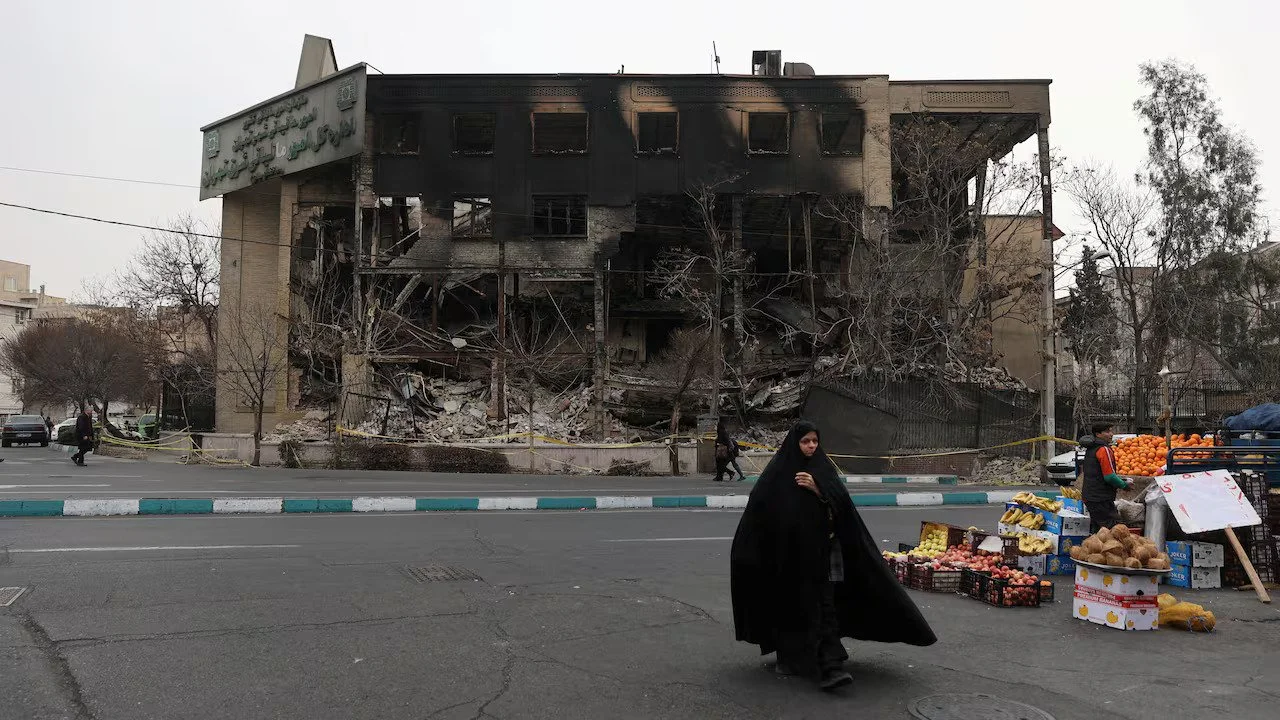
Photo Credit: Majid Asgaripour/West Asia News Agency/Reuters via CBC News
On Dec. 28, 2025, in response to Iran’s worsening economy, citizens began protesting in what would become the nation’s most violent uprising in decades. In addition, tens of thousands of protesters, journalists, and lawyers were imprisoned in secret detention centers across the nation.
Iranian state TV said on Dec. 28, 2025, that 3,117 people have been killed, as reported by CBC. However, some human rights organizations have estimated the death toll to be in the tens of thousands. For instance, as of Feb. 23, the US-based Human Rights Activists News Agency (HRANA) has verified 7,007 deaths, of which 236 were children. An additional 11,744 cases are currently under investigation. Furthermore, according to a network of over 80 Iranian medical professionals interviewed by The Guardian, the death toll could “exceed 30,000,” as “all publicly cited death tolls represent a severe underestimation.”
According to Amnesty International, the protests started with shopkeepers in the capital city of Tehran, who closed their shops and launched demonstrations in the streets in response to the nation’s soaring inflation and skyrocketing prices of everyday goods. The rial, Iran’s official currency, had plunged to a record low against the US dollar, Amnesty claims, due to years of international sanctions, economic mismanagement, and inadequate handling of environmental degradation.
As more and more people joined the protests, they became increasingly political, with many calling for an end to the current regime, which has been in place since a 1979 coup. The protests spread to every one of Iran’s 31 provinces, and there may have been as many as five million demonstrators, as per Iran International.
On Jan. 8, as the protests intensified, Iran blocked internet access for the general public, which restricted information flow and the ability to collect evidence. Police proceeded to kill thousands of protesters, mostly in a two-day crackdown on protests from Jan. 8-9, according to Iran International.
According to The Guardian, testimony from morgues, graveyards, and hospitals across Iran reveals a concerted effort by Iranian authorities to conceal the scale of the casualties. The Guardian cites bodies being transported in ice-cream vans and meat trucks, rushed mass burials of unclaimed and unidentified bodies, and hundreds of corpses disappearing from Iran’s forensic facilities.
Civilian reports collected by HRANA and news agencies reveal that Iranian authorities also held several crackdowns at memorial ceremonies. Testimony from HRANA recounts how 18-year-old Arian Nabati was shot in the head, heart, and side while attending a 40th-day memorial ceremony for those killed in the protests in Mashhad on Feb. 17. He did not survive, and his family was prohibited from holding a public ceremony. The New York Times reported that “another video showed large crowds screaming as they fled smoke and detonations near a cemetery in Abdanan.”
Additionally, HRANA states that 41,880 people have been arrested as of Jan. 26, and that 245 cases of forced confessions have been broadcast. According to Amnesty International, Iranian authorities have seized protesters, journalists, and lawyers during nighttime home raids, at checkpoints, in workplaces, and from hospitals. In addition, detainees’ families, activists, and journalists have told Amnesty International that “the authorities are routinely refusing to provide any information about the fate and whereabouts of many of those detained, thereby subjecting them to enforced disappearance and placing them at heightened risk of torture and other ill-treatment.”
According to the US-based Center for Human Rights in Iran (CHRI), detainees are denied access to lawyers and family members, and are often held unofficially in warehouses and abandoned buildings operating outside Iran’s legal detention framework. The CHRI has called these “black box detention sites […] among the gravest concerns documented.” Furthermore, Amnesty International collected testimony from sources reporting ill-treatment during detentions, including “beatings, sexual violence, threats of summary executions, and deliberate denial of adequate food, water, and medical care.”
The protests ceased on Jan. 9, but unrest remains. The government continued to rely on regular armed patrol units, enforced curfews, and the threat of the death penalty, Amnesty International reported. According to an HRANA report, at least 2,063 people were executed in 2025 without a fair trial, a 119 per cent increase from 2024.
Maryam Alemzadeh, an associate professor of the history and politics of Iran at the University of Oxford, told Al Jazeera that “even if this round of protests is repressed by extreme violence, another could emerge in no time until a radical shift occurs.”