
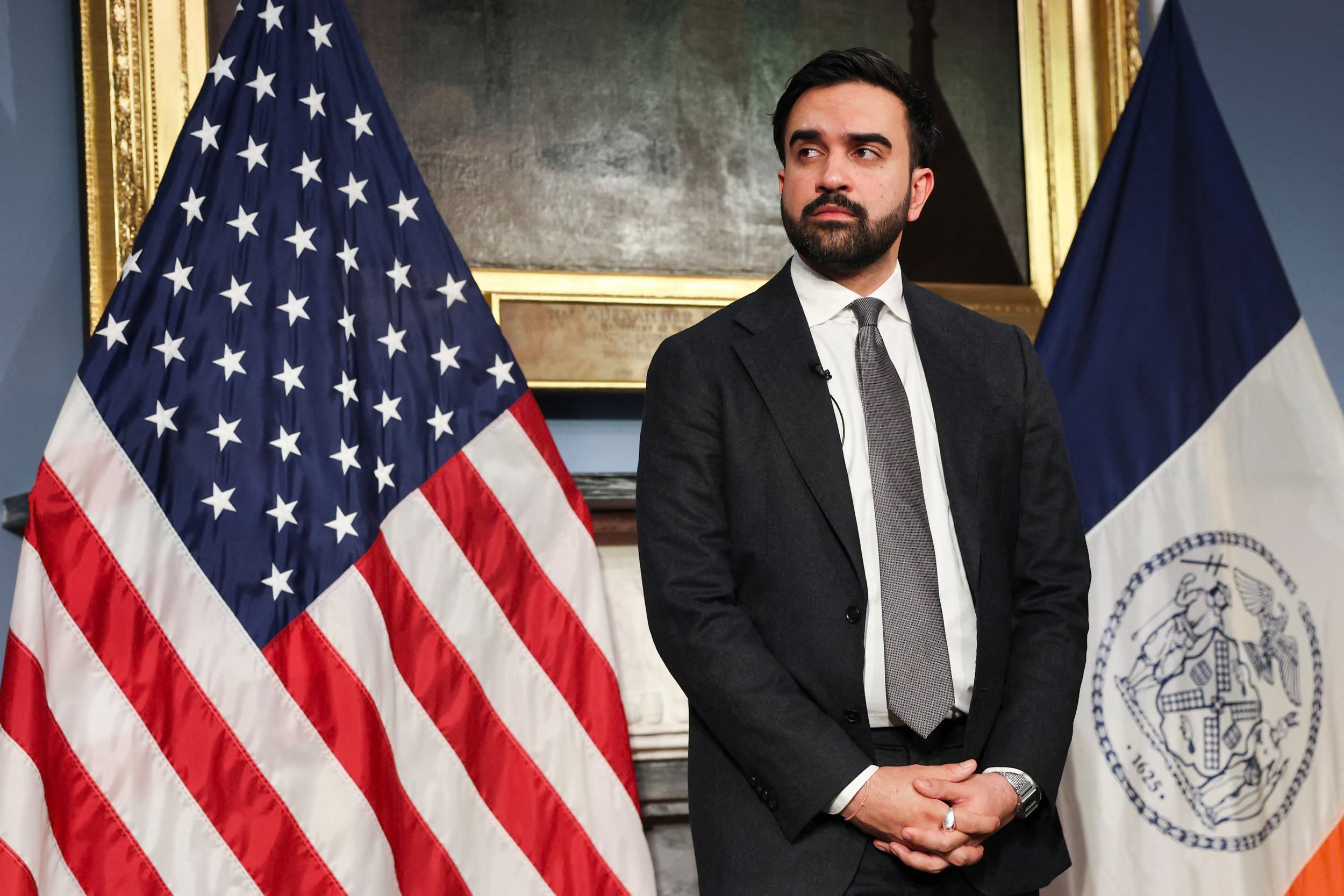
Photo Credit: Timothy A. Clary/AFP-Getty Images via The Guardian
On Sept. 29, New York City Mayor Zohran Mamdani announced the first comprehensive plan to combat anti-Semitism in his city. His plan includes increased security funding for synagogues and a focus on learning about Jewish history in the city's public schools.
According to the Associated Press, Jewish people are the victims of around 50 per cent of reported hate crimes in New York City, although they account for 12 per cent of the total population.
Mamdani’s strategy focuses on raising awareness about Jewish history and fighting anti-Semitism, in part by preserving and understanding Jewish history, culture, and Jewish people’s contributions to New York City.
According to a statement from the mayor's office, Mamdani will collaborate with NYC Public Schools to ensure that more students visit the Museum of Jewish Heritage, which will help them learn about Jewish history and the Holocaust stories of Jewish New Yorkers, according to the statement. The plan also includes increased security funding for synagogues and emphasizing Jewish history in New York City Public School’s classrooms.
According to Mamdani’s office, funding for Partners Against The Hate will be doubled to US$6.4 million. These funds will support community organizations that work to counter hate crimes and support victims.
Another US$1 million will be invested into security at synagogues and other houses of worship, and $26 million will be invested into the city’s Office for the Prevention of Hate Crimes.
Another part of the strategy involves making it easier to report hate crimes and a campaign to increase New Yorkers’ knowledge about the City Human Rights Law.
Brad Lander, a former city comptroller and prominent supporter of Mamdani, said the mayor’s plan is a “thoughtful strategic combination of education for tolerance, enforcement of civil rights, and investment in safety,” according to the Associated Press.
Amy Spitalnick, the chief executive of the Jewish Council for Public Affairs, commended the report for its proposals, but questioned why it used a limited description of anti-Semitism.
“Obviously there is a very real threat of right-wing anti-semitism,” Spitalnick told The New York Times. “The report should also recognize that in the last few years, we’ve seen increasing violence targeting Jews under the guise of protesting Israel.”
Liz Krueger, a state senator from Manhattan, praised City Hall for proposing “concrete strategies the city intends to pursue to address the growth of antisemitism.”
“It is crucial that our mayor, as the leader of our government, continues to make clear through words and actions that Jews in New York can express their religious and political beliefs,” she said, according to The New York Times.
Critics of the strategy have mainly focused on what they say is Mamdani's anti-Israel rhetoric.
Rabbi Rick Jacobs, president of the Union for Reform Judaism, said he supports some aspects of Mamdani’s plan, but also criticized the mayor’s stance on Israel.
“For this effort to be effective, Mayor Mamdani must also commit to stopping his harsh anti-Israel rhetoric that makes Jewish New Yorkers vulnerable as there are clearly times when antisemitic attacks are fueled by anti-Zionism,” he said, according to the Associated Press.
During his 2025 election campaign, critics were upset with Mamdani for not initially criticizing the slogan “globalize the intifada,” which some say incites violence against Jewish people
“To not be willing to condemn the slogan ‘globalize the intifada,’ it just demonstrates his callous disregard for antisemitism […]” Rep. Debbie Wasserman Schultz told The Hill.
However, Mamdani did not use the phrase himself, and later spoke out against the slogan, according to the Associated Press.
Ofir Akunis, Israel's consul general in New York, posted on X a statement that was directed to Mamdani.
“Until you recognize that your language against the Jewish State, which you don’t recognize as the homeland of the Jewish people, is the fundamental reason for the rise in antisemitism in New York City, it will continue to increase,” he said.
According to Partners Against The Hate, nearly two-thirds of Jewish voters in New York City are not in support of Mamdani’s handling of anti-Semitism. In a survey of 503 Jewish voters in New York City, 65 per cent disapproved of Mamdani’s response to anti-Semitism, which includes 47 per cent who say they strongly disapprove of Mamdani’s policies on the matter.
As well, Israeli Prime Minister Benjamin Netanyahu called Mamdani the “antisemitic mayor of New York,” during his Sept. 24 speech at the United Nations’ headquarters in New York City, according to the Associated Press. Netanyahu also accused Mamdani of spreading lies about Israel.