
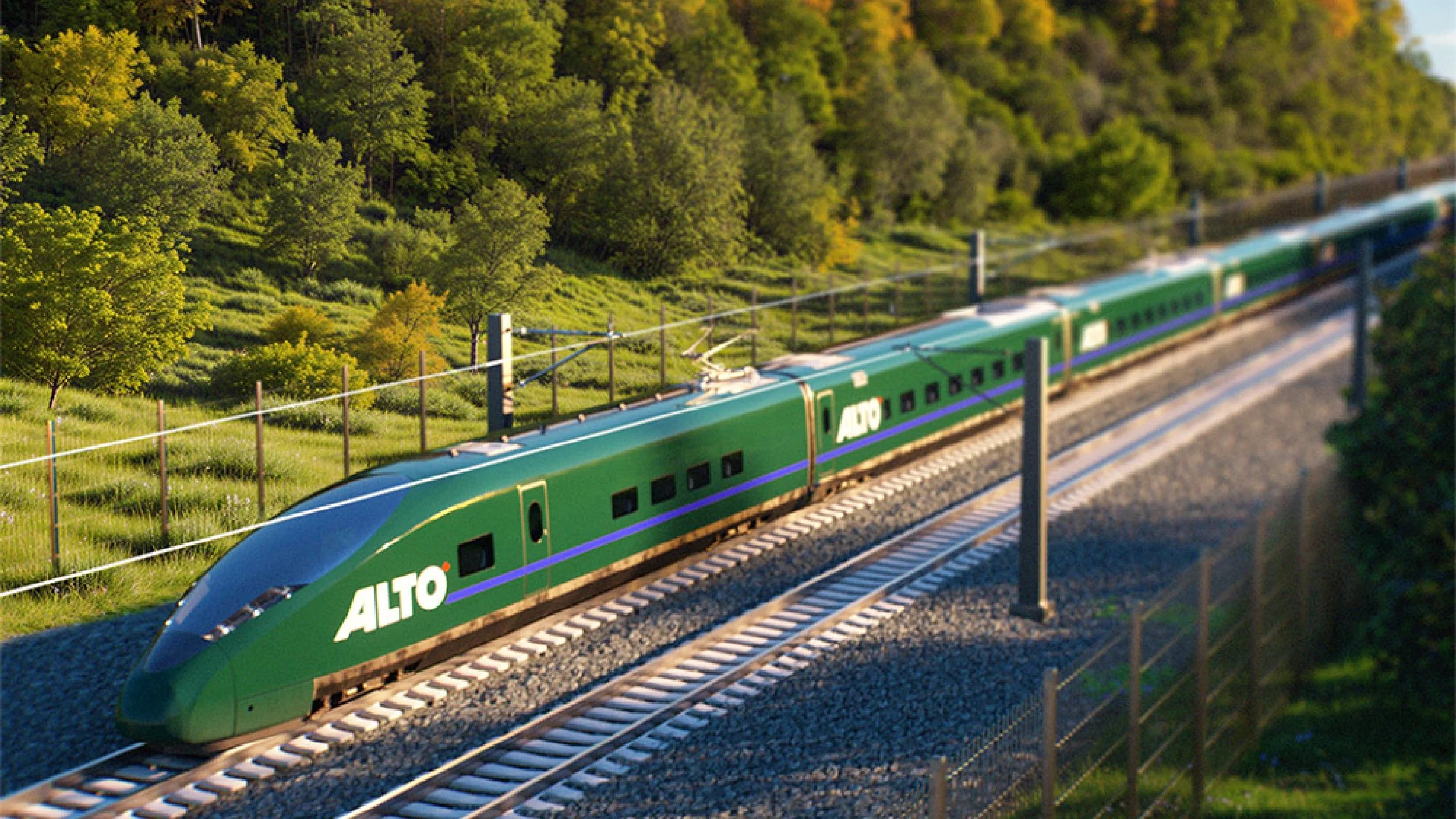
Photo Credit: Alto
In recent months, a new report from the Parliamentary Budget Officer (PBO) suggested that the Alto High-Speed Rail Project, proposed as Canada’s first high-speed railway, could cost $75 billion to $113 billion, compared with the government’s former estimate of between $60 billion to $90 billion. Construction is set to begin in 2030, and it’s expected to take at least 15 years.
According to CBC News, the PBO’s report suggested that approximately $169 million will be added to the project’s total price tag for every additional kilometre of high-speed rail, while every kilometre of elevated track will add an additional $153 million in cost.
Some of the other factors that led the PBO to set a higher cost estimate included a 15-kilometre tunnel into Montreal, which involves significant risk of construction delays and can quickly become over-budget when building over the rough terrain of the Canadian Shield region. As per CTV News, every year of delay would result in another $1.5 billion in cost on top of the overall price tag.
The Alto high-speed railway was initially designed to connect Toronto to Quebec City, transporting over 43 million passengers per year through one of Canada’s largest economic regions. The Government of Canada expects this initiative to increase the country’s GDP by 1.1 per cent annually. Moreover, an estimated 51,000 new jobs will be created, and numerous opportunities for businesses and suppliers in Canada will be generated throughout the process, according to the federal government’s website.
On the other hand, the continuation of this plan is facing uncertainties and backlash from different groups. Currently, the federal Conservative Party is questioning whether the benefits of Alto will balance out its costs.
Conservative transport critic Dan Albas believes that Alto should be canceled.
“Canadians are out of money,” he stated. “The Liberals want to blow $113 billion on another Liberal illusion that will come late, go over budget and leave taxpayers stuck with the bill, if it even gets built at all.”
As well, areas of the tracks will pass through private farmland, which could disrupt agricultural development in farming communities across Ontario and Quebec, critics say. Jérémie Letellier, President of the Fédération de l'UPA de la Montérégie, a regional branch of Quebec's largest agricultural federation, spoke about this issue in a statement.
“In the end, the decision goes to the federal government, so it's clearly a political issue right now. We will do whatever we can to stop this project. There's nothing good for farmers in this.” Alto has also experienced opposition from east Ontario residents living alongside the railway’s proposed route.
Among those defending the project is federal Minister of Transport Steve MacKinnon, who believes the railway could be a way to “build a strong economy and create new opportunities for Canadians.” He expressed optimism in cooperative federalism and stated that he was ready to work with the Quebec government on this project, according to CBC News.
According to a statement from MacKinnon’s office, “Alto is a project of exceptional scale that will benefit Quebecers for generations to come. It will transform the way people travel between major centres in Quebec and Ontario, with tangible benefits for their work, education and social lives.”