
US Department of Justice sues to block California’s Electoral Redistricting
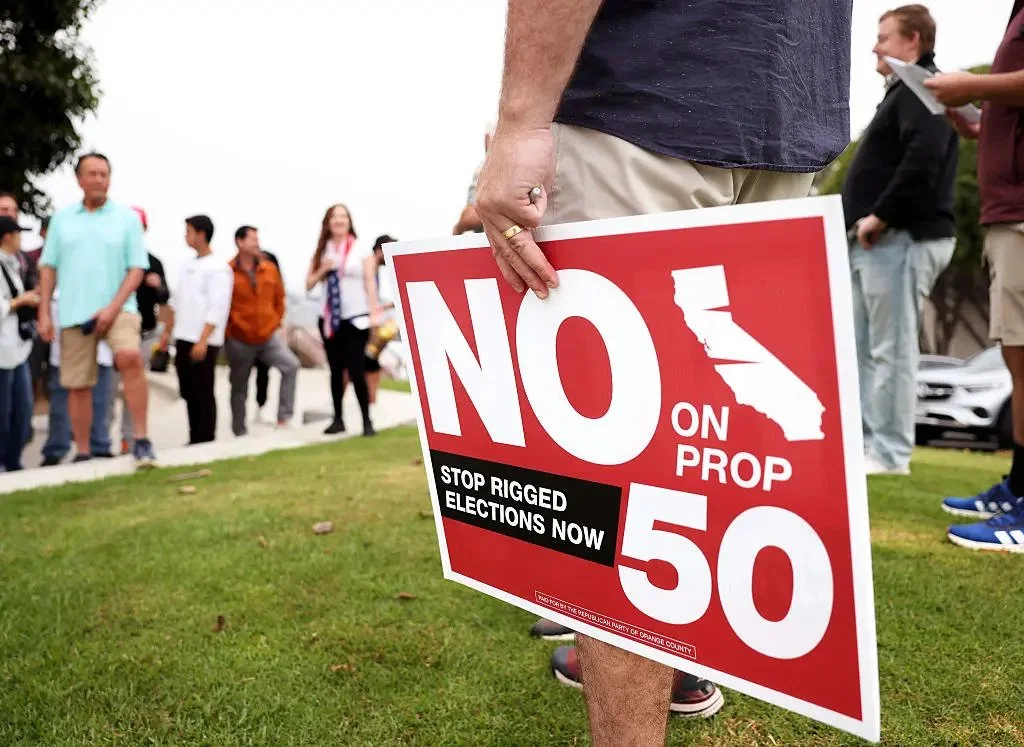
Photo Credit: Christina House/Los Angeles Times/Getty Images via Time Magazine
A "rush-job rejiggering of California's congressional district lines" is how Republican member of California’s State Assembly David Tangipa described the California Democrats’ new bill, Proposition 50, in his court submission.
On Nov. 4, voters in California approved Proposition 50 (Prop 50) in a referendum; the bill calls for emergency reformations of California's congressional district maps, similar to the redistricting that took place in Texas on Aug. 20, according to NPR.
The official voter guide in favour of Prop 50 states that the ballot measure was motivated by a desire to "counter Donald Trump's scheme to rig next year's congressional election."
Typically, redistricting takes place once every decade and is informed by data from the US Census. This is meant to ensure that each district holds a roughly equal population, meaning that all people have the same voting power, according to the US Census Bureau. However, the new maps in Texas, made by the current Republican-dominated legislature, are aimed at increasing potential electoral victories for the Republican Party, according to The New York Times.
Due to this, the Democrat-controlled California state bodies drafted a bill that would offset the seats lost in Texas by gerrymandering the congressional district maps to increase the number of districts that the Democrats win, according to NPR.
Gerrymandering is the manipulation of political district boundaries in order to favour a specific group. There are two different gerrymandering methods, “cracking” and “packing”. Cracking is where a single political group is split across many districts, making them a minority in all. Packing is where a single political group is concentrated into a few districts, meaning that although they have a large majority in those districts, their overall influence is hampered.
According to current US Supreme Court precedent, gerrymandering cannot be ruled on by federal courts as of 2019, when the Court ruled in Rucho v. Common Cause that "claims of excessively partisan gerrymandering" cannot be assessed according to the Constitution, as it does not provide an "objective measure for assessing whether a districting map treats a political party fairly." However, gerrymandering based on a racial basis is illegal, according to the Rucho v. Common Cause ruling.
Democratic Governor Gavin Newsom, a supporter of Prop 50, has come under fire from US Attorney General Pam Bondi. In a press release from the Justice Department, Bondi called the proposition "a brazen power grab that tramples on civil rights and mocks the democratic process.” The Justice Department is intervening on the side of the plaintiffs in a case brought by Tangipa, who is one of the Republican representatives who stands to lose his seat in the assembly.
The Justice Department thinks it may have a case in compelling a rollback of Prop 50 because they allege that the new district maps "bolster the voting power of Hispanic Americans because of their race."