
US Government Shuts Down For Longest Time in History
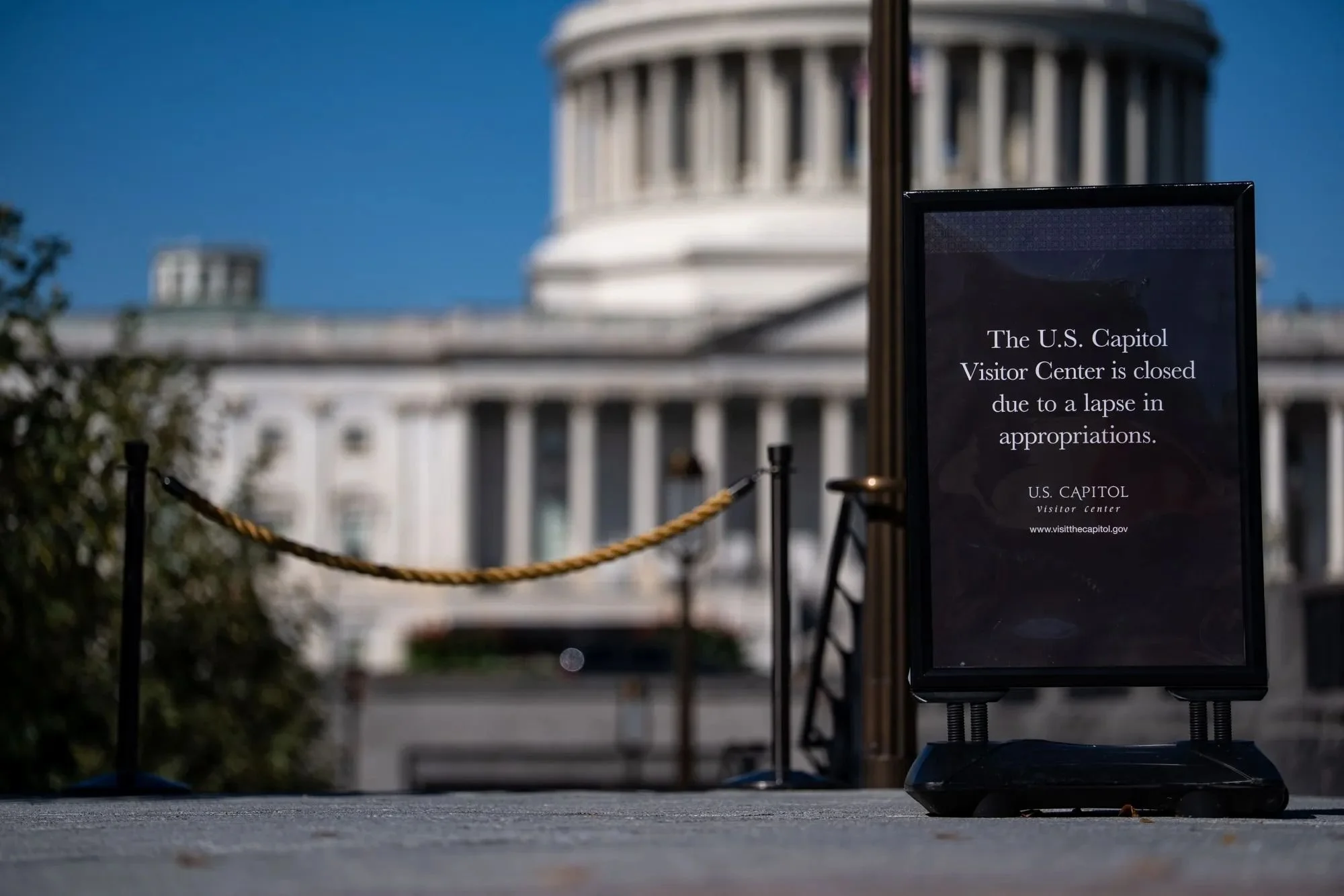
Photo Credit: Bloomberg
From Oct. 1 to Nov. 12, the US government shut down after lawmakers failed to pass new funding bills.
A shutdown occurs if Congress does not agree to annually fund the government, according to BBC. In the case of a shutdown, each government agency has its own contingency plans on how to best operate under the situation. Nevertheless, many agencies stop or reduce the services they provide, furlough non-essential employees, and have essential employees work without pay.
Many essential services like Medicaid, veterans' healthcare, and social security benefit payments continue to run during a shutdown. Other important services, though, are put in jeopardy, such as the Special Supplemental Nutrition Program for Women, Infants, and Children (WIC), the Supplemental Nutrition Assistance Program (SNAP), and applications for housing or small business. Hundreds of millions of dollars in federal contracts are also suspended.
According to BBC, analysts estimated that this year’s government shutdown would knock roughly 0.2 per cent off of quarterly growth for each week it continues.
Congresswoman Luz Rivas stated on her website that, “In CA-29 [California's 29th Congressional District], almost 59,000 people will lose their health coverage because of Republicans' cuts to Medicaid and nearly 31,000 will see the cost of health coverage soar with the expiration of their health care tax credits.”
The impacts of the shutdown are not only economic, with over 42 million federal food aid recipients affected by the suspension of their government.
Alongside this, White House press secretary Karoline Leavitt told reporters that “jobs reports will likely never be released, and all of that economic data released will be permanently impaired.”
However, on Nov. 12, a 328-page bill was passed to fund the government and most federal agencies until Jan. 30, with a guarantee of a later vote on extending Affordable Care Act tax credits that are set to expire on Jan. 1, 2026.
The bill also provides funding for the SNAP food aid program (which provides food benefits to low-income families to supplement their grocery budget), full year appropriations to the legislative branch, the Department of Agriculture, and the Department of Veterans Affairs.
Explicitly, the bill does not include an extension on the expiring health insurance subsidies that affect approximately 24 million Americans, a topic that concerned the Democrats, and which, according to Al Jazeera, the Trump administration will not renew when they expire at the end of the year.
In a statement regarding the shutdown, US President Trump stated, "This was an easy extension but they [democrats] didn't want to do it the easy way, they wanted to do it the hard way."
After 40 days of fighting, six Democrats and one independent senator joined the other 53 republican members in signing the new bill into place. After the vote, Democratic Sen. John Hickenlooper told ABC News, "there's no good choice [...] 42 million people were being held hostage. [...] They were threatened with hunger and starvation for the SNAP program."