
ANALYSIS | US Military Conducts Operation In Venezuela, Captures Dictator Nicolás Maduro
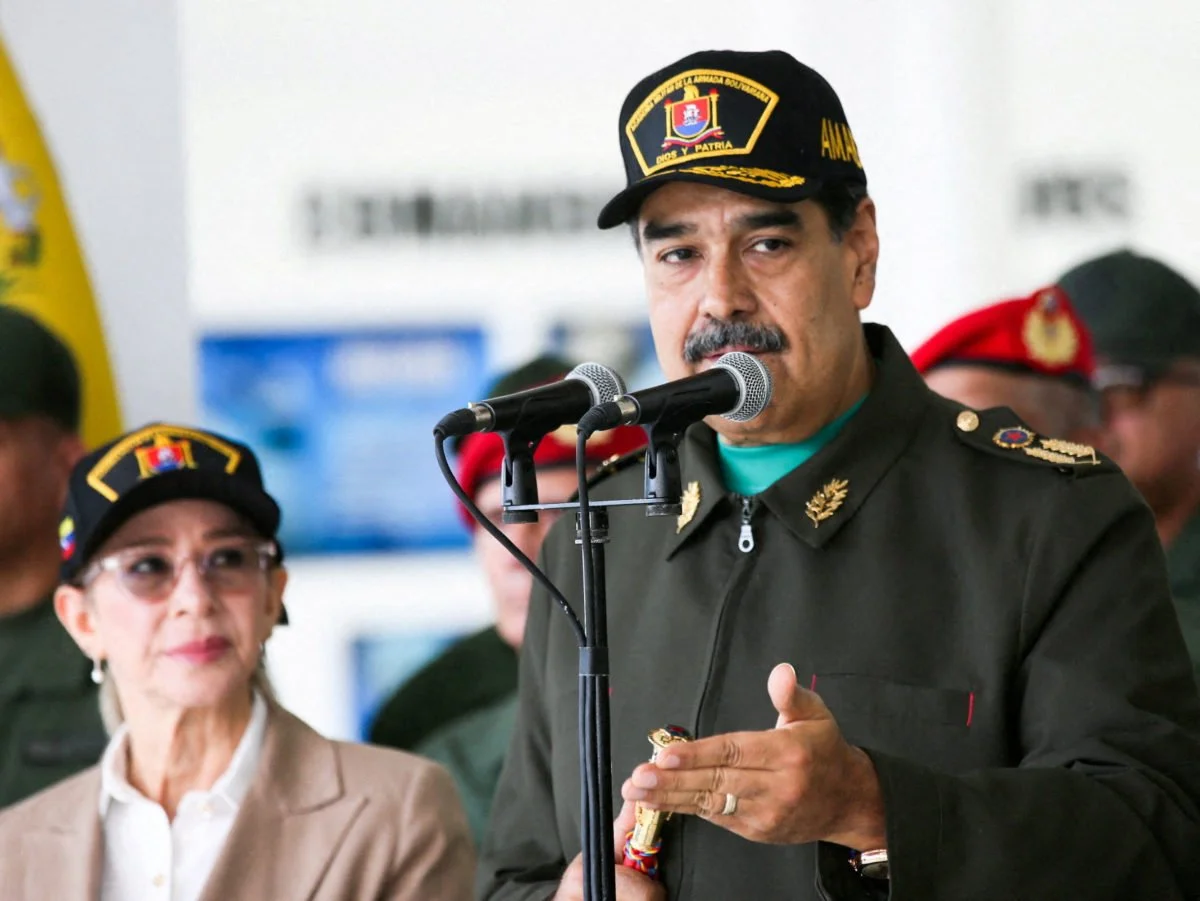
Photo Credit: Miraflores Palace/Reuters via The Guardian
At approximately 2:00 AM on Jan. 3, US forces launched a military incursion into Caracas, the capital of Venezuela, forcefully taking Venezuelan dictator Nicolás Maduro and his wife, Cilia Flores de Maduro, into custody and detaining them at the Metropolitan Detention Center in New York.
In a midday news conference from his Mar-a-Lago residence, US President Donald Trump said that Maduro and Flores would now face criminal court proceedings tied to a 2020 indictment from the US Department of Justice that outlined federal charges against them. US Attorney General Pam Bondi outlined in an X post that Maduro has been charged with “Narco-Terrorism Conspiracy, Cocaine Importation Conspiracy, Possession of Machineguns and Destructive Devices, and Conspiracy to Possess Machineguns and Destructive Devices against the United States.”
This capture was part of a military operation codenamed “Operation Absolute Resolve.” The operation took the US several months to plan, with undercover officers being sent in by the CIA as early as August, as per BBC.
"This thing worked like clockwork. That doesn't happen often," said David Fitzgerald, a former Latin America Chief of Operations for the CIA, according to BBC. "It is not the military tactics that drive the operation, but the intelligence."
As reported by BBC, 150 military aircrafts were involved in the operation, with helicopters flying approximately 100 feet above the terrain to get to Maduro’s compound. One helicopter was hit, but there were no US casualties. Rather, according to CNBC, a Pentagon official confirmed that seven US service members were injured during the raid, including Chief Warrant Officer Eric Slover, who received the Medal of Honor during Trump’s State of the Union address. On the other hand, Venezuela's Interior Minister Diosdado Cabello reported that the operation left over 100 dead, as per CNBC.
On Jan. 5, Maduro pleaded not guilty to the narcotic charges in Manhattan federal court. "I am innocent. I am not guilty. I am a decent man. I am still president of my country," Maduro said in Spanish through an interpreter, according to Reuters. Flores de Maduro also pleaded not guilty. Their next court date is set for March 17.
According to AP News, on Jan. 28, US Secretary of State Marco Rubio said in a Senate Foreign Relations Committee Meeting that the US will retain control of Venezuela’s oil revenue in the short term to ensure the money goes toward stabilizing Venezuela. Rubio added that the interim leaders of Venezuela will submit a budget each month outlining their financial needs.
“The funds from [oil sales] will be deposited into an account that we will have oversight over,” Rubio said, according to AP News, adding that the US Treasury would control the process. Venezuela, he said, “will spend that money for the benefit of the Venezuelan people.”
The US military operation has ignited intense legal and ethical controversy, with critics arguing it violated fundamental principles of sovereignty and international law.
In an X post, President of the UN General Assembly Annalena Baerbock responded to the US military’s capture of Maduro by stating that “the UN Charter is not optional — it is our guiding framework.” She added that Article 2 of the UN Charter stipulates that all Members of the United Nations, including the US, shall “refrain in their international relations from the threat or use of force against the territorial integrity or political independence of any state, or in any other manner inconsistent with the purposes of the United Nations.”
“A peaceful, safe, and just world for everyone is only possible if the rule of law prevails instead of might makes right,” she added.
Amnesty International has also condemned the intervention. “The US military operation in Venezuela constitutes a clear violation of the UN Charter,” said Agnès Callamard, Amnesty International’s Secretary General, according to the Amnesty International website. “It is an act of aggression that endangers civilians and tears apart the guardrails of international law. Not only was the Trump administration’s use of force illegal, but it could encourage unlawful actions by other states and herald similar future actions by the USA.”
Days after the operation took place, the Wall Street Journal Editorial Board noted that the justification the US used to take control of Venezuela could potentially be used, for example, in a takeover of Taiwan by China.
On the other hand, according to Reuters, on Jan. 4, the US ambassador to the UN, Mike Waltz, defended the legality of the US military operation by citing Article 51 of the UN Charter, which says that nothing "shall impair the inherent right of individual or collective self-defense if an armed attack occurs against a member of the United Nations."
"In this case, you have a drug kingpin, an illegitimate leader indicted in the United
States, coordinating with the likes of China, Russia, Iran, terrorist groups like Hezbollah, pumping drugs, thugs, and weapons into the United States of America, threatening to invade its neighbors," Waltz said, according to Fox News.
This year was not the first time that President Trump considered action against Maduro and Venezuela. Several sources and one-time Trump supporters, now vocal detractors, such as former US Secretary of State John Bolton and Former Deputy Director of the FBI Andrew McCabe, have alleged that during Trump’s first term in office, he considered invading Venezuela. According to Workers World, in his 2019 memoir, McCabe wrote that he recalled Trump stating that Venezuela was “the country we should be going to war with, they have all that oil, and they’re right on our back door.”
In recent years, tension between the US and Venezuela has risen. In 2024, the Biden administration tightened trade sanctions on Venezuela. Furthermore, in addition to keeping close ties with Nicaragua and Cuba, in the last several years, Venezuela has strengthened its ties with US adversaries, particularly China, Russia, and Iran.
Then, in 2025, both Maduro and Trump were inaugurated into office, Maduro for his third time and Trump for his second. However, Trump said he did not consider Maduro to be a legitimate democratically elected ruler. According to the Carter Center for Democracy, the only independent group allowed to monitor Venezuela's presidential election, Maduro’s opponent received 67 per cent of the vote before being forced to flee the country.
According to CNN, only days into his second term, Trump announced mass deportations for many US migrants, including Venezuelans, whom he considered to be criminals, and labelled the Venezuelan gang Tren de Aragua as a foreign terrorist organization. Maduro clapped back; he rejected the notion that Venezuelan migrants were criminals and said that his administration had already dismantled Tren de Aragua, but did not provide any evidence to back up this claim.
In March 2025, the US labelled more than 200 Venezuelan migrants as criminals and deported them to the Terrorism Confinement Center (CECOT) in El Salvador, as per CNN. Venezuela criticized the move as a “kidnapping” and demanded their return. In July 2025, Washington and Caracas reached an agreement to exchange detainees: the US gave the 200 migrants back to Venezuela, while Venezuela sent 10 detained Americans back to the US, as per CNN.
However, tensions rose again in September 2025 when President Trump deployed military aircraft and ships to the Caribbean with the stated purpose of intercepting potential drug smuggling vessels. By mid-December, at least 30 boats had been destroyed in transit, resulting in the deaths of 100 people, which Maduro labelled as illegal, as per CNN.
Then, in December 2025, President Trump ordered a “total blockade” of US-sanctioned oil tankers; with that, the US Coast Guard began intercepting all vessels leaving or arriving at the Venezuelan coast. On Dec. 12, according to CNN, President Trump said that military ground action would soon begin in Venezuela to protect the American youth from drug traffickers. Then, in late December, the US government carried out a drone strike on a remote dock of a Venezuelan port believed to be storing drugs for the Tren de Aragua gang. Finally, on Jan. 3, Operation Absolute Resolve commenced.