
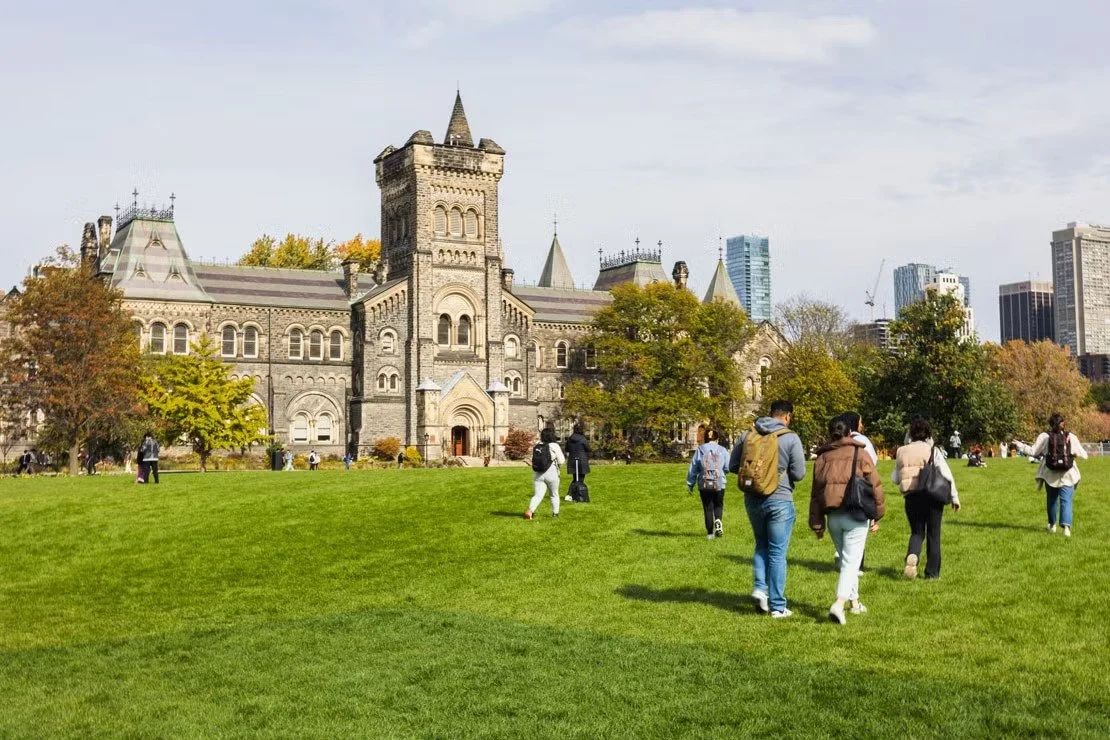
Photo Credit: University of Toronto
As October begins, universities across Canada and most of the world open high school applications for their 2027–2028 cohorts. Careful planning, as well as knowledge of application requirements, are key to maximizing your chances of getting accepted.
Local schools, such as the University of British Columbia (UBC), Simon Fraser University (SFU), and the University of Victoria (UVic) have very similar timelines and requirements. Similar application requirements also apply to schools across Canada, but specific details and dates of admission may vary. US and international schools often assess grades and applications differently, so students should follow up with their own research on their schools of choice.
Take Your Time
The most important thing for students to remember when applying to university is to take their time, according to UBC’s virtual application workshop. While schools like Langara College operate on a first-come, first-served basis, most universities with grade requirements have application deadlines at the end of January. If students are aiming for early admission and scholarships, they often have to apply in November or December.
According to their website, UBC has a Dec. 1 deadline for scholarship applications and a Jan. 15 final deadline for all applications. SFU has similar deadlines, with scholarship applications due on Dec. 15 and all general applications due on Jan. 31.
This leaves students with months to craft the perfect application before applying. It is not a race to finish first, it is a competition to see who can prove their skills the best.
Have Multiple Plans
Almost everyone has a top-choice university; however, competition can be high, and rejection is always a possibility. Smart people have a backup plan, but the smartest people have multiple, as the popular internet aphorism goes.
If your goal is to get into UBC, then apply to multiple backup schools. Schools with higher acceptance rates are often cheaper to attend, and they often offer transfer programs into other universities for students who are successful in their first year, according to the BC Transfer Guide.
In addition, it is important to remember that every school puts different weight on their applicants’ grades, essays, and extracurriculars. If a school with higher admissions rates rejects a student, a school with lower admissions rates might accept them, because that school places greater emphasis on their other strengths in its evaluations.
Try New Things
Competitive universities want to admit students with unique interests. Joining clubs, getting promoted as an executive in a club, trying school contests, volunteering, working, acting, playing instruments, playing sports, and getting certifications are great ways for students to diversify and distinguish themselves.
However, high school marks and transcripts remain a core part of the application process, and some programs only evaluate applicants based on their grades. While extracurriculars can help in application processes for scholarships and highly competitive programs, many Canadian universities do not ask students to describe their extracurriculars when applying for some or all of their programs.
Grade 12 students who find it challenging to make time to explore new interests may also want to take the time to search their pasts for relevant experiences and opportunities that they’ve pursued. Universities are less interested in admitting students who have crammed all of their extracurriculars into their last year of high school. Instead, they want to admit students who were exploring their interests throughout their time in high school.
Students in lower grades should start pursuing extracurriculars early, so they will be prepared when it is time to apply to university.
Do It Yourself
Everyone has heard of AI. And with the competitive nature of some programs, and some applications totalling almost ten thousand words, some applicants gravitate to using the technology.
Applicants believe that a computer will write better than them, but for university applications, that could not be further from the truth. Admission officers want to see a personal writing style that is unique, so they can learn more about the person applying, whereas AI has the same boring style for every essay it writes.
Universities have to sort through tens of thousands of essays — if one is not interesting, they will lose interest fast, and being human is one of the best ways to make your writing compelling.
Reach for Your Goals
Universities often advertise very low academic requirements needed to apply. The real requirement to gain admission is often vastly higher than that. Schools cannot accept every single student that applies, so researching the average grades of admitted students is key to setting realistic goals. Students in grades 11 and 12 may also benefit from asking last year’s graduates about their grades.
Overall, programs in arts and fine arts have lower academic requirements, while programs in sciences and business can often be harder to get into, though this can vary between schools. SFU has admissions averages between 80 percent and 90 per cent, according to GrantMe. UBC Vancouver’s admissions average is 89–91 per cent and UBC Okanagan’s average is 85–87 per cent, according to The Ubyssey.
If these numbers seem worrying, remember that these are averages, so it is possible to get in with lower grades. As well, these figures are overall averages for all admitted students. Specific programs may have averages that are significantly higher or lower.