
Air Canada's $430 Million Strike
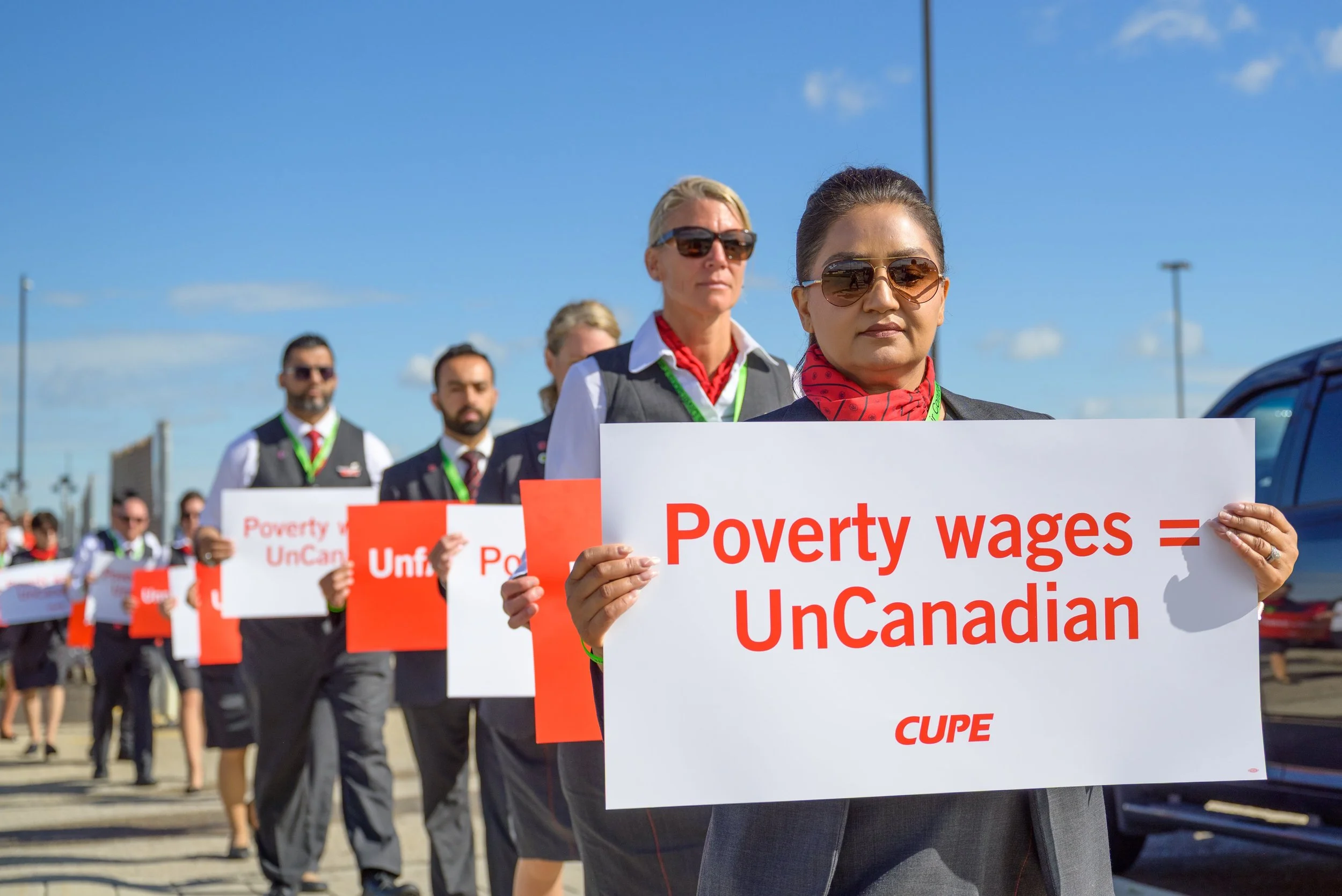
Photo Credit: Canadian Union of Public Employees
On Aug. 16, 10,000 Air Canada flight attendants, represented by the Canadian Union of Public Employees (CUPE), went on strike, unsatisfied with the company’s failure to negotiate higher wages. CUPE had been negotiating a new agreement since March, but Air Canada declared the situation an “impasse,” meaning that it was at a stalemate and that no progress could be made.
Air Canada offered a salary increase of 8 per cent over the first year of a four-year contract, which would see some flight attendants making less than the federal minimum wage. Full-time Air Canada flight attendants would receive around $2,500 monthly, while the minimum wage is $2,840 per month.
“The offer that Air Canada has put on the table is not good enough. The wages are insulting, and the recognition of our unpaid hours is only partial and stretched over years,” shared Owen Gallant, an Air Canada flight attendant on Facebook.
The strike also continuously affected Air Canada’s customers. For flights booked during the strike, the company promised reimbursement for other reasonable transportation costs as well as overnight accommodations and meals. Now, Air Canada claims that the majority of its labour disruptions have been resolved, but according to City News, there are still about 8,000 reimbursement cases pending. The company says that some cases may take more time than others because of complexity.
"The airline industry has, in aggregate, lost more money than it’s made," Ian Lee, a professor of management at Sprott School of Business, Ottawa, told CBC News. "I tell my students, don't ever invest in two industries: restaurants and airlines, because you'll lose your shirt over time."
In all, the strike was estimated to have a $430 million impact, mainly due to refunds issued to customers. However, Air Canada stated that it saved an estimated $145 million in costs due to less flying activity, mainly due to a reduction in fuel costs.