
Sudan faces Famine and Humanitarian Crises as Civil War Progresses
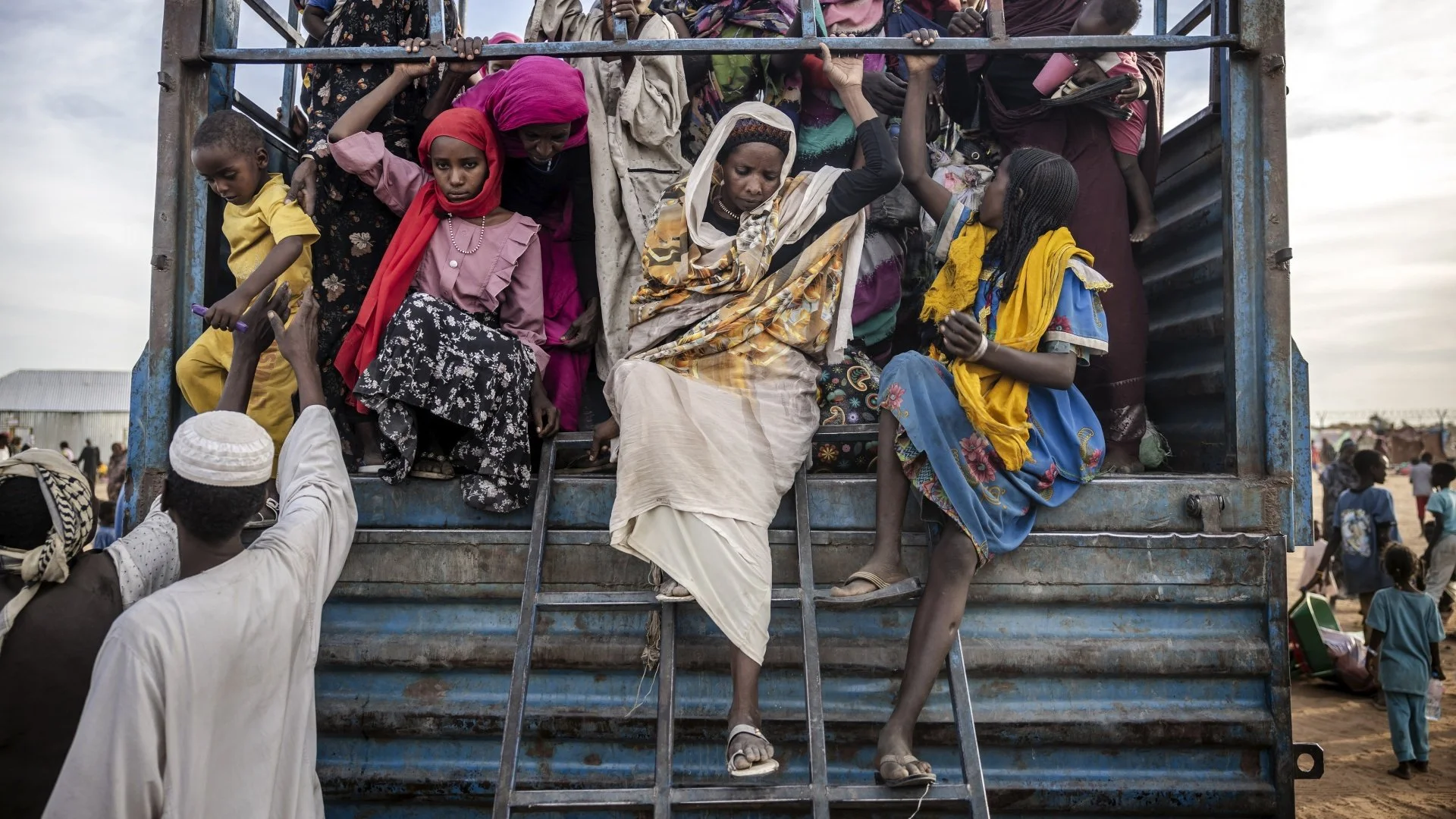
Photo Credit: Humans Rights Watch
Since April 2023, Sudan has been in the midst of a civil war between its army and a powerful military-like group called the Rapid Support Forces (RSF). This nearly three-year-long conflict has caused famine and over 150,000 deaths across the country. Thirty million people are in need of assistance, and about 12 million people are fleeing their homes.
In 2019, Sudan’s president of 30 years, Omar al-Bashir, was removed by the army after massive protests erupted against him. After this, the army took over; yet citizens continued to protest, demanding democratic government instead of military rule. To calm the situation, a joint military-civilian government was formed to eventually achieve full democracy. However, this government was overthrown in October 2021. Later, the leader of the coup and army, Gen. Abdel Fattah al-Burhan and his deputy, the current RSF leader, Gen. Mohamed Hamdan Dagalo, began to differ in opinion on the direction the country was going in, and it is suspected that they both wanted to hold onto wealth and power, according to BBC. As a result of these disputes, they split and began fighting each other on Apr.15, 2023.
In Sudan, civilians are now facing famine in many cities, such as El Fasher and Khartoum.
On Feb. 14, a UN meeting was held in Ethiopia to discuss the humanitarian crises in Sudan. At the meeting, UN Secretary-General António Guterres warned that the war is spilling over into the surrounding region. “It is a crisis that demands sustained and urgent attention,” he said, highlighting the need to ensure protection of civilians and humanitarians. The UN stated that it had launched an appeal for $6 billion, which would help approximately 26 million people, but since the meeting, it is unclear whether that money was gathered or sent. Additionally, a ceasefire was called for during the meeting; however, it was not reached.
In May 2023, a seven-day ceasefire took place, but it promptly collapsed. In June 2023, the RSF seized several cities and towns, including El Geneina, Darfur, West Kordofan, and, in June 2024, Singapore. Some of these seized territories are part of the border triangle of Sudan, Libya, and Egypt; this access to the border means that the RSF can safely receive supplies and reinforcements.
Discussions for an appeal of ceasefire took place in July and August of 2024, however, both talks failed. From September 2024 to October 2024, the army conducted a massive-scale operation in Khartoum state, claiming Al-Dinder and Al-Suki, with many fighters defecting from the RSF and joining the Sudanese Armed Forces (SAF). In retaliation, the RSF launched a violent campaign on Oct. 21, 2024. According to the International Service for Human Rights, dozens of women and girls were abducted and raped, and 20 killings were confirmed in the village of Alhelalya.
From November 2024 to January 2025, the SAF continued to advance, and after brutal fighting, reclaimed Singa and Wad Madani. By March, the SAF had reclaimed the majority of the territories; however, the RSF remained in control over Southern and Western Omdurman. Since then, multiple massacres have taken place, killing many and separating people from their families.
In March, Sudan accused the United Arab Emirates (UAE) of aiding the RSF in the conflict and filed a case against the UAE at the International Court of Justice (ICJ). Sudan claims that the UAE's military, financial, and political support of the RSF makes it "complicit in the genocide." However, the UAE has denied all accusations.
The RSF has been accused of committing genocide against non-Arabic groups in the country. Sudan's submission to the International Court of Justice states, according to the news agency AFP, that "The United Arab Emirates fuels the rebellion and supports the militia that has committed the crime of genocide in West Darfur. The United Arab Emirates must make full reparation for the injury caused [by] its internationally wrongful acts, including paying reimbursement to the victims of the war."
According to SkyNews, in order to keep control of Sudan's gold mines, the UAE is alleged to have paid the RSF. A leaked report from the UN shared that experts believe the allegation that the UAE smuggled weapons to the RSF through Chad is credible, despite the UAE's claim that Sudan has no reliable evidence.
On Nov. 24, the RSF agreed to the ceasefire proposed by the US; however, the SAF rejected it, accusing the US mediators of being biased. Burhan, Sudan’s top general, called it “the worst document yet” since it “eliminates the armed forces, dissolves security agencies and keeps militia where they are,” referring to the RSF.
According to the UN’s fact-finding mission, there has also been a rise in sexual and gender-based violence in the country. Humanitarian relief is being weaponized, and hospitals are under attack as well. “Let us be clear: the conflict in Sudan is far from over,” said Mohamed Chande Othman, the chair of the fact-finding mission. “The scale of human suffering continues to deepen. The fragmentation of governance, the militarization of society, and the involvement of foreign actors are fueling an ever-deadlier crisis.”
“What began as a political and security crisis has become a grave human rights and protection emergency, marked by international crimes that stain all involved,” said Member of the Fact-Finding Mission, Mona Rishmawi.