
ANALYSIS | Hungarian Prime Minister Viktor Orbán Loses Election To Opposing Party TISZA
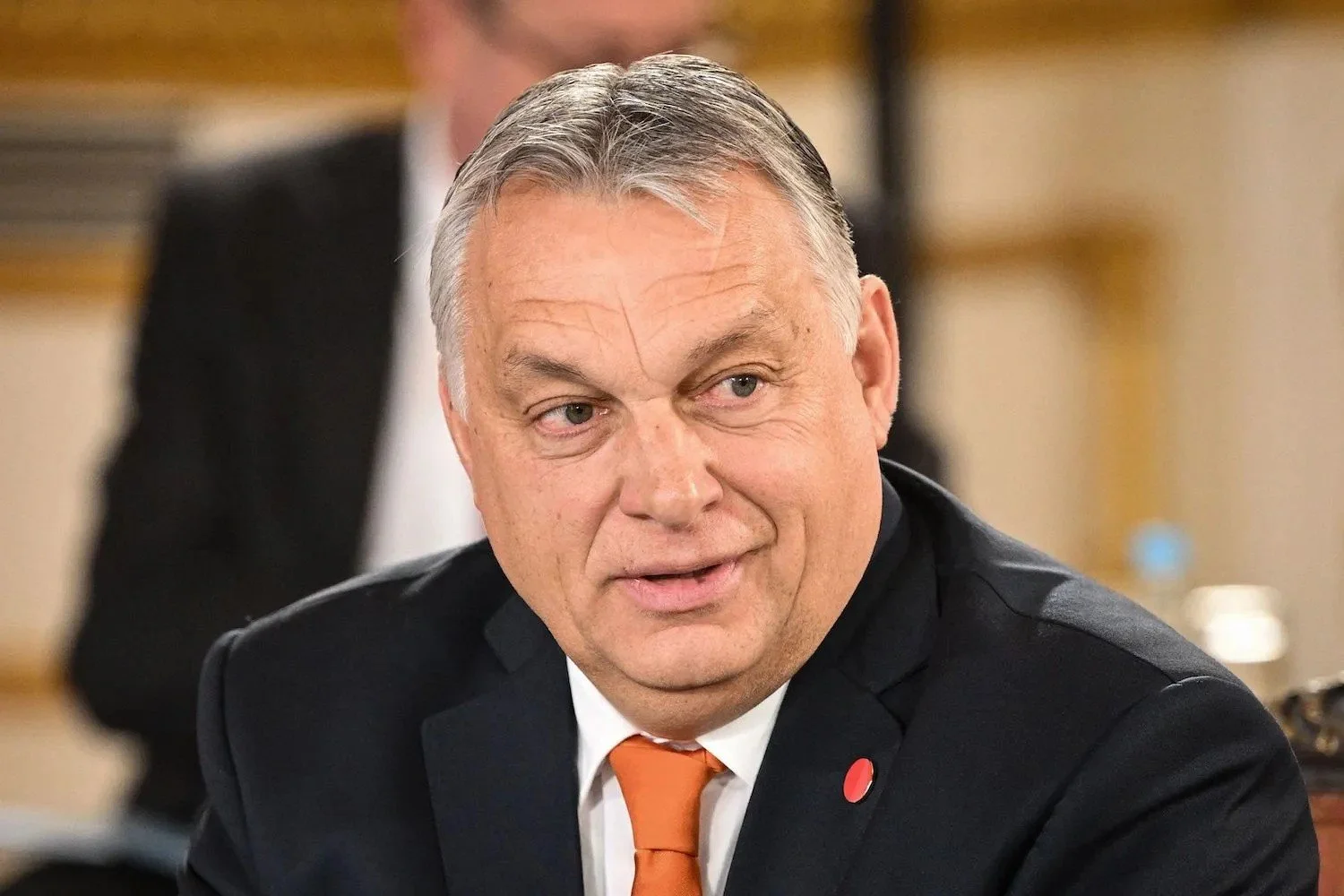
Photo Credit: Leon Neal/AFP via Foreign Policy
In parliamentary elections held in Hungary on Apr. 11, Péter Magyar, the leader of the TISZA party, defeated incumbent Prime Minister Viktor Orbán, ending his 16 year tenure as prime minister.
The elections resulted in a landslide victory for TISZA, with the party capturing 141 seats and 53 per cent of the popular vote. With more than two-thirds of the seats in Hungary's National Assembly, TISZA now holds a supermajority, allowing the party to pass legislation without the support of opposition parties, including Fidesz – Hungarian Civic Alliance, the previously ruling Christian nationalist political party.
The Apr. 11 election saw the highest turnout since the fall of communism in Hungary in 1989.
From 2002 to 2024, Magyar was a member of Fidesz, but resigned following the Novák presidential pardon scandal in 2024, when then-Fidesz president Katalin Novák pardoned Endre Kónya, a former deputy director of a children's home in Bicske, a small town near Budapest, who had been convicted of helping cover up child sexual abuse commited by the centre’s director. It also saw both people who signed the pardon, Novák and Judit Varga, the minister of justice, resign.
Orbán’s coalition also became mired in controversy in late March, during a scandal involving his foreign minister, Péter Szijjártó, who was revealed to have shared information with Russian Foreign Minister Sergey Lavrov about recent European Union meetings. This caused outrage among politicians in EU countries, as well as pro-EU voters.
In order to prevent vote splitting, many opposition parties did not run, and backed TISZA instead. Due to the high concentration of votes between TISZA and Fidesz, many minority parties lost their seats, with only the far-right Our Homeland Movement party getting seats other than TISZA, Fidesz, and the Christian Democratic People's Party (KNDP), which is allied with Fidesz.
The Fidesz–KDNP alliance is an electoral alliance that has been described by political experts as Christian nationalist and far-right. The alliance was initially described by political experts as centre-right but it has increasingly shifted to become more radical over time. According to political scientist Peter Kreko, “Since the [2015] refugee crisis, Fidesz has become much more radical and even more prejudiced than it was before.” It was founded in 2005 and has been governed by Orbán of Fidesz and Zsolt Semjén of the KDNP since its founding.
The Fidesz–KDNP alliance had won every election with a supermajority starting from the 2010 elections. This was in part due to the infamous Őszöd speech, which occurred after the 2006 elections. It was a leaked private speech spoken in May 2006 by Ferenc Gyurcsány, the Prime Minister of Hungary from 2004 to 2009. In the speech, addressed to his party, the Hungarian Socialist Party (MSZP), Gyurcsány said many profanities and said, “We lied in the morning, we lied in the evening and we lied at night." This caused protests in September, when it was leaked by The Hungarian Radio, calling for Gyurcsány to resign. Despite surviving the initial outrage, mostly by releasing the full speech and giving more context, the MSZP lost 131 seats in the 2010 elections.
TISZA is a centre-right, pro-EU party. It had previously run in the 2024 European Parliament election and won 29.7 per cent of the vote in Hungary.
Orbán, along with several others, founded Fidesz in 1988. The party had initially started out as a centre-left, liberal party. He had previously been prime minister from 1998 to 2002. Under Orbán’s government, analysts and political experts have described Hungary’s rapid shift away from democracy, becoming increasingly Euroskeptic.