
BC Government Aims To Amend DRIPA, Indigenous Leaders Disapprove
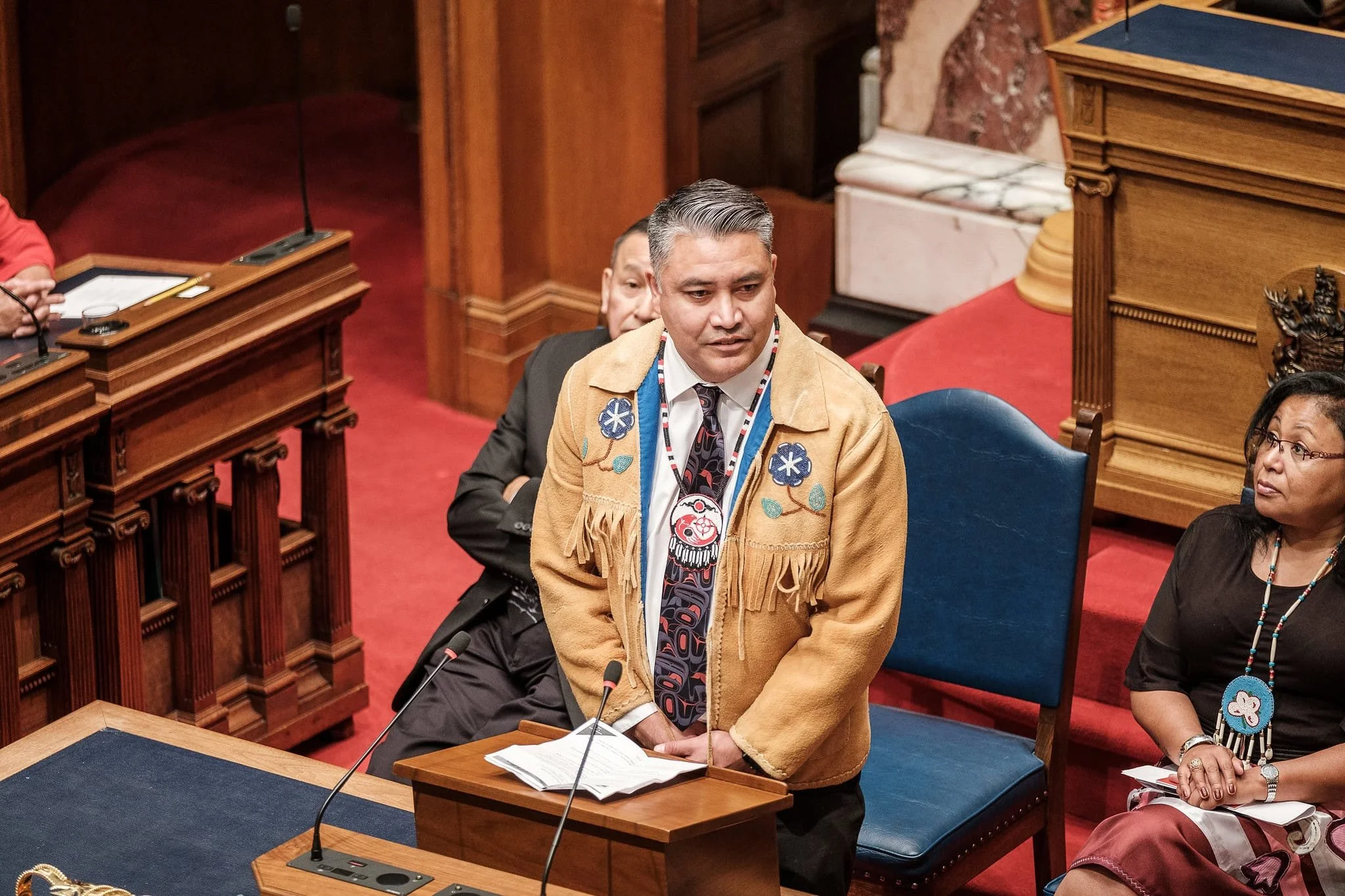
Photo Credit: Province of BC/Flickr via The Narwhal
The BC government is currently planning to modify the Declaration of the Rights of Indigenous Peoples Act (DRIPA), despite resistance from Indigenous groups.
The Declaration Act was unanimously passed by the BC legislature in November 2019 and establishes the United Nations Declaration on the Rights of Indigenous Peoples as the province’s framework for reconciliation, according to a description from the BC government. British Columbia was the first Canadian province to bring the UN declaration into law.
According to CBC, while speaking at the Natural Resources Forum in Prince George on Jan. 20, BC Premier David Eby said that recent court decisions "have created real confusion about what the Declaration Act is about and what reconciliation means in practice."
"Reconciliation is the business of government-to-government relationships between the provincial government, the federal government and First Nations governments. It is not for the courts to take over," Eby said. "That's why we're going to amend the Declaration Act in spring to make that intent explicit.”
In December 2025, Premier Eby first hinted at altering DRIPA after the BC Court of Appeal found that the Act was “inconsistent” with the province’s preexisting system of granting mineral rights, as per Global News. Previously, a mineral claim could be registered automatically for a small fee online. However, this process bypassed the outlined duty in DRIPA to consult impacted First Nations beforehand. The BC Court of Appeal ruling determined that the province has a duty to consult First Nations before approving mining operations.
According to CBC, while at a news conference in Surrey, BC, Eby said that "[the decision] potentially puts courts in the driver's seat, instead of British Columbians," he said. He added the government would be reviewing the decision and "if necessary, amend the Declaration Act to ensure that our original intention when we introduced it is clear."
Even before that, Premier Eby faced pressure for the August 2025 ruling by the BC Supreme Court that awarded the Quw'utsun (Cowichan) Nation Aboriginal title over 300 hectares of land in one of the wealthier parts of Richmond, where the Quw'utsun Nations’ summer villages once stood. The Supreme Court also provided the Quw'utsun Nation with fishing rights along the Fraser River. The region spans 150 properties and 750 acres, and is full of large warehouses, multi-million dollar mansions, and wineries.
According to CBC, while the Quw'utsun nation said that they do not intend to pursue land owned by private owners, the case still raised fears among critics who believe it undermines private land ownership in BC.
“Reconciliation must respect private property,” Premier Eby told the BC Chamber of Commerce on Dec. 10, 2025, while referring to the BC Supreme Court ruling, as per the Vancouver Sun. “Private, fee-simple property rights are non-negotiable. Whether a family home or an industrial park owned by a business, we will go to the wall to defend private property — full stop.”
“The uncertainty this case creates is toxic to the work we have to do, and the economy we have to grow,” added Eby.
Many Indigenous groups are frustrated with the idea of altering DRIPA, which protects many of their rights related to land and culture. On Feb. 9, more than 100 First Nations and First Nations organizations released a joint statement directed towards Premier Eby, where they objected to any amendments being made to the Declaration Act.
“Despite recent court decisions that reaffirm the crucial need to consult and negotiate, a negative narrative has begun to take hold,” the statement reads. “This narrative wrongly blames First Nations for uncertainty while ignoring the historical reality that British Columbia was largely settled without treaties. It replaces facts and experience with fear, and cooperation with division.”
“Recent calls to amend the Declaration Act or appeal court rulings are rooted in this fear-based response,” the statement continued. “They suggest that the framework we have built together is the problem, when in fact it has been part of the solution. These actions would not create certainty — they would slow progress, increase litigation, and grind projects to a halt as First Nations are once again forced to defend our rights and interests through the courts.”
The statement concluded that the BC government can walk two paths: “a path of negotiation, collaboration, and shared prosperity with First Nations and all British Columbians, or a path that takes us backward to a place of uncertainty and conflict that none of us want to revisit.”