
BC Paramedics Reach Tentative Deal With Government After 97 Per Cent Vote In Favour Of Strike
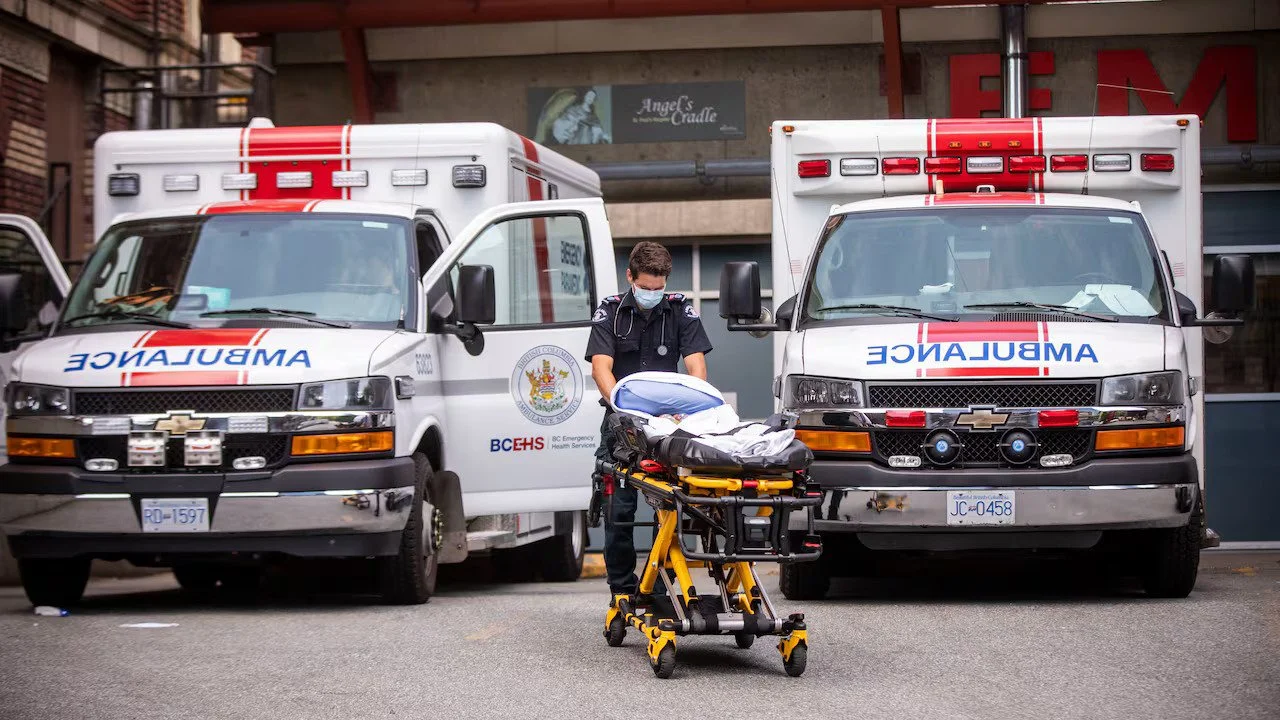
Photo Credit: Ben Nelms/CBC
From Feb. 2 to Feb. 16, more than 6,000 emergency dispatchers and ambulance paramedics voted in a strike vote conducted by their union, the Ambulance Paramedics of British Columbia (APBC). Ultimately, the paramedics voted in favour of striking. However, before job action began, the union agreed to a tentative agreement with its employer.
The union says that BC’s ambulance service is understaffed, especially in rural areas and Indigenous communities. Last November, Lillooet, Mission, Delta, Williams Lake, and Chetwynd, among other communities, faced temporary ER closures due to staffing shortages, and in total, the APBC says 250 temporary hospital and emergency room closures happened in 2025. “We’re sending out paramedics across the province to keep communities staffed and covered, but with every closure, it’s harder for them to keep the system moving,” said Union president Jason Jackson in a news release, as per CBC.
“This isn’t something that we wanted. We know the realities of a strike,” Tait said, according to City News. He added that the union had done absolutely everything it could to avoid having to consider job action. “We’ve bent over backwards to give the government more time to help to find efficiencies in our contract to save money, but at the end of the day, you need two people that are willing to negotiate to get a contract done.”
Jackson agreed that a strike is “always a last resort,” as per CHEK News, but the current situation for workers is also not acceptable.
“Not only does [the] government’s offer fail to address the serious challenges we face, but it also doesn’t even live up to what other public sector workers have already been guaranteed [...],” he shared in an APBC statement.
The APBC said that once an essential services order issued by the Labour Relations Board is in place, workers will be in a position to legally strike. The Labour Relations Board is an independent organization that has authority under the Labour Relations Code to decide applications and provide mediation services. An essential services order issued by the Labour Relations Board designates which services are essential and sets minimum staffing levels in response to a labour dispute. According to the Health Employers Association of BC (HEABC), the paramedics’ employer, this order will “prevent immediate and serious danger to the health of the public in the case of any job action.”
Tait said that since paramedics provide an essential service, they won’t fully “walk off the job” during strike action. Instead, the union will use rolling striking action, The Daily Hive reported.
Eighty per cent of all paramedics and first responders in the union participated in the strike vote, with 97 per cent voting in favour of job action.
However, after extensive negotiation, the APBC reached an agreement with BC Emergency Health Services, the Health Employers Association of BC, and the provincial government on Feb. 20.
According to a statement from the APBC, “throughout bargaining, APBC emphasized the need for meaningful improvements to mental health and wellness supports, benefits, wages, and training.”
The HEABC also supports the tentative agreement, saying in a statement that it will "protect and strengthen critical services in B.C.’s public sector,” and support "labour stability" and the provincial government’s "efforts to find operational efficiencies that preserve front-line services.”
The APBC will have a province-wide tour, where details of the agreement will be presented to more than 6,000 paramedics and dispatchers ahead of a ratification vote.