
Canada and India Agree to New Trade Deal
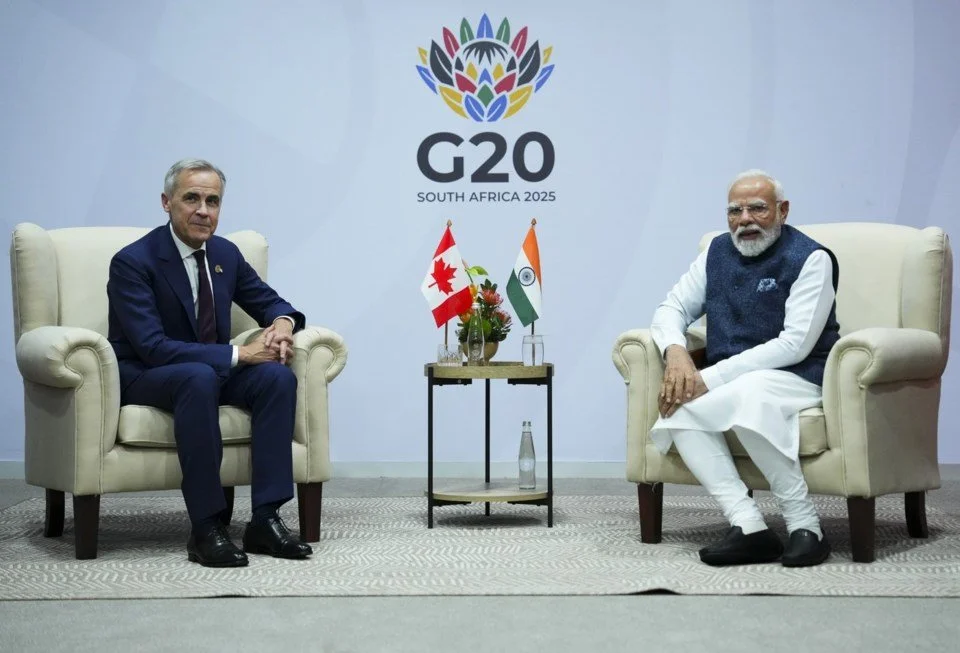
Photo Credit: Sean Kilpatrick/Canadian Press via Business in Vancouver
Leaders from Canada and India agreed to launch a Comprehensive Economic Partnership Agreement (CEPA) starting on Nov. 23, after almost two years of impasse.
The next steps for the deal are currently being discussed. Commerce between the two countries, currently valued at $70 billion, could “more than double our deal before,” said Prime Minister Mark Carney in a recent social media post. He aims to reestablish a bilateral deal after his predecessor, Justin Trudeau, initiated a temporary pause due to suspicions that the Indian government was involved in the killing of a Sikh separatist.
“The meeting went really well. We focused on areas of aerospace, AI, critical minerals, energy and agriculture,” said Canadian Trade Minister Maninder Sidhu at the Canada-India Economic Dialogue. Held on Nov. 11 to 14, the meeting was the most important economic engagement between the countries in a while, and was “very productive,” according to Sidhu, who met with Indian Commerce Minister Piyush Goyal.
In the summer of 2025, Carney and Indian Prime Minister Narendra Modi met at the G7 Summit in Alberta, and again at the G20 Summit in South Africa on Nov. 22.
Relations between Canada and India suffered in June 2023, when Canadian Sikh separatist activist Hardeep Singh Nijjar was assassinated in Surrey, BC. Former Prime Minister Justin Trudeau claimed that there were “credible allegations” that Indian government agents were involved in the assassination. India denied all accusations, and both sides expelled six of each other’s diplomats, and any potential deal was extinguished. In October, both sides came to an agreement to let all diplomats return.
Canada’s current negotiations with India could mean a strong economic relationship that is protected from US President Donald Trump’s tariffs. Canada is also negotiating to lower a tariff imposed by India on many countries, including Canada, that is meant to protect domestic farmers. "Whether we can have a quota, whether we can have a lesser tariff, whether we can have a different system of how we can make sure that in the long run pulses from Canada go regularly to India," said Dinesh Patnaik, India’s High Commissioner to Canada, according to Reuters.
"India is the world’s fifth largest economy, and that means big new opportunities for Canadian workers and businesses," Carney said in a social media post. The Globe and Mail indicated that the agreement opens doors to “diversifying trade away from the U.S.”
Additionally, Canada is currently seeking other ways to strengthen its relationship with India.
When asked about the authenticity and trustworthiness of the Indian government’s role in the trade deal, Carney said, “We have to remain vigilant. We are vigilant.” Just last year, the RCMP openly stated that the Indian government was responsible for serious crimes in the country. Moreover, Patnaik told CTV that Canada is not currently a reliable energy supplier. He added that “a country of that size is going to consume everything, not just energy, food … we are going to be the largest consumer in the world.”
Despite this, Patniak says he’s looking forward to Canada being a reliable partner, according to BNN Bloomberg.
A large portion of Canada’s immigrants are from the subcontinent, including 393,000 Indian nationals studying in Canada in 2024, and more than 1.8 million Canadians of Indian origin.