
Carney's First Federal Budget Approved
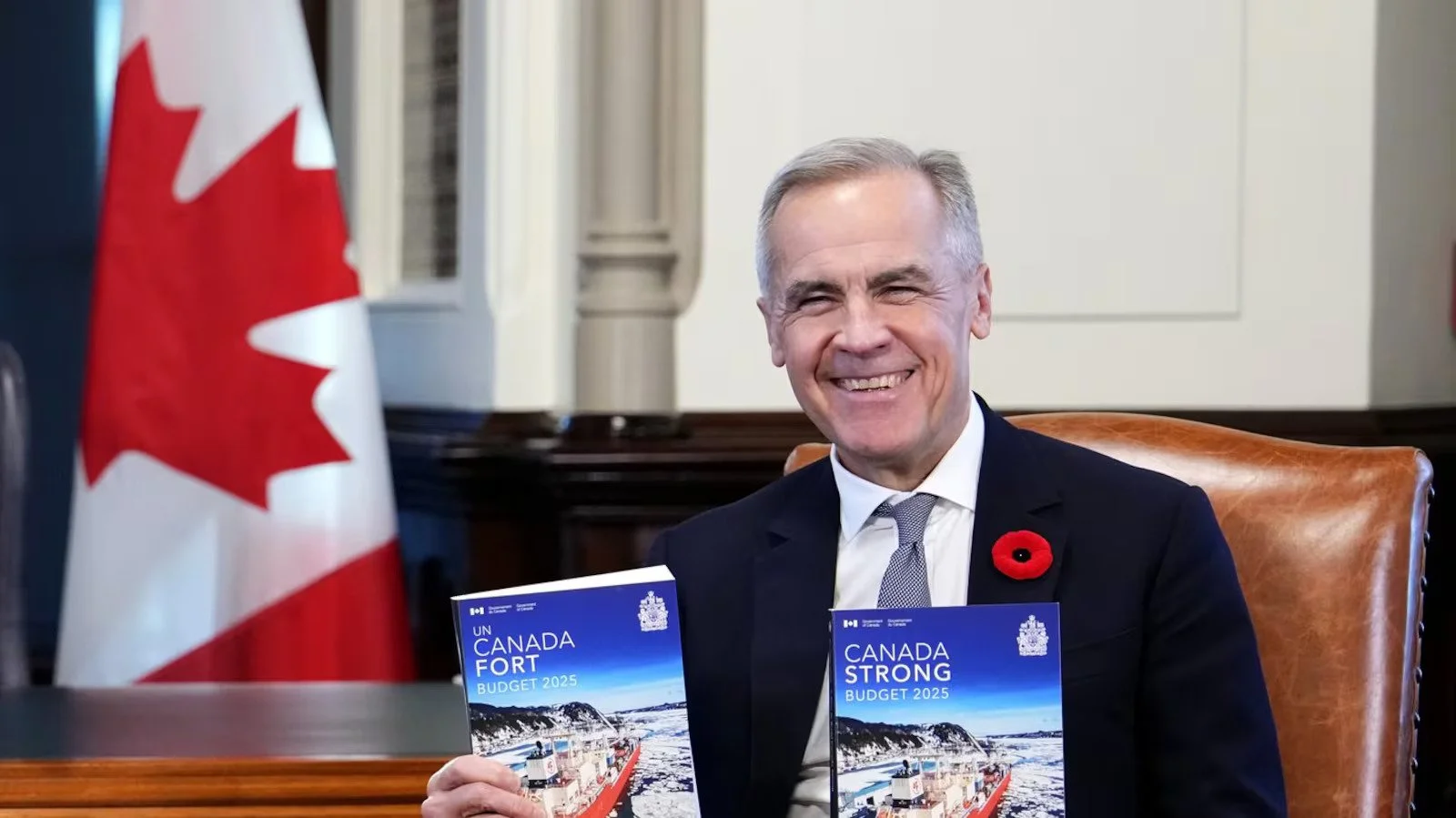
Photo Credit: Justin Tang/The Canadian Press via CTV News
On Nov. 4, Prime Minister Mark Carney unveiled his government’s inaugural federal budget, titled “Canada Strong.” According to The New York Times, the budget outlines broad, forward-looking investments aimed at stimulating economic growth and strengthening national security. It also aims to reinforce Canada’s resilience amid heightened global uncertainty through wars and trade disputes.
Focused on stability and long-term competitiveness, the plan allows Canada to navigate shifting international dynamics while advancing key domestic priorities, CBC reports. The budget was first introduced by Finance Minister François-Philippe Champagne in early November, and has already withstood two votes.
The plan includes approximately $51.7 billion in anticipated savings, resulting in an added deficit of $78.3 billion for the current fiscal year — substantially higher than earlier estimates, according to CBC. $115 billion is also allocated for infrastructure over the next five years, along with an additional $30 billion for defence and security and $25 billion for federal housing initiatives. $110 billion will be used over five years toward tax incentives and strategic investments in emerging technologies and infrastructure — investments the government says are intended to help spur $500 billion in private-sector investment by 2030.
“We’re addressing the productivity and competitiveness challenge that this country has been facing,” Finance Minister François-Philippe Champagne announced on Nov. 4.
On Nov. 17, the fiscal plan — the second-largest budget in Canadian history — passed with the support of key opposition MPs, including Green Party Leader Elizabeth May.
However, according to the BBC, the budget faced sharp criticism from many opposition MPs in the Conservative Party and the Bloc Québécois. It was approved by a narrow margin of 170 votes to 168.
May shared with the House of Commons that she backed the budget after Carney said that his government would uphold Canada’s climate commitments. “Without what I heard from the prime minister today, I would have voted no,” she said Oct. 17, on Parliament Hill.
With May’s support secured, the Liberals needed only two abstentions — or one additional opposition vote — to pass the budget through. The bill ultimately passed after two Conservatives and two NDP MPs abstained.
The remaining MPs from the Conservative Party and the Bloc Québécois voted against the budget, arguing that Prime Minister Carney’s plan fails to adequately address affordability concerns.