
Canada Sees Its Largest Military Recruitment In 30 Years
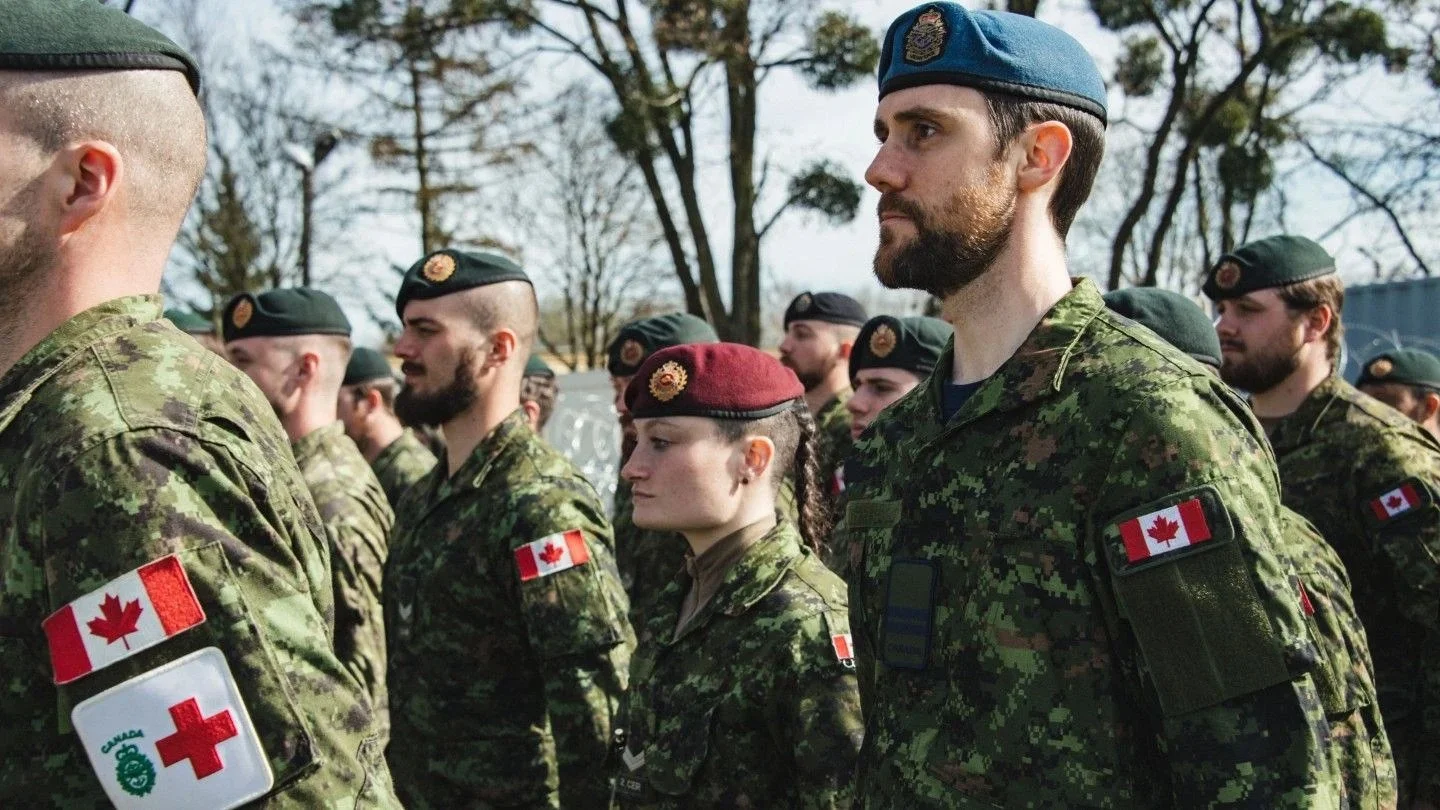
Photo Credit: Canadian Army/X via Defence 24
This year, the Canadian Armed Forces reached their highest level of recruitment in over three decades, marking a significant increase compared to previous years.
On Apr. 20, David McGuinty, Canada’s Minister of National Defence, announced the Canadian Armed Forces’ annual report of enrollment for the 2025–26 fiscal year. According to the report, the Canadian Armed Forces enrolled 7,310 new soldiers, exceeding their original target of 6,957 members. In comparison, during the 2023/2024 year, the Canadian Army Forces enrolled 4,334 new members.
In the 2026-27 fiscal year, the Canadian Armed Forces aims to recruit about 8,200 new members.
This surge in military enrollment over the past two years is closely tied to growing global armed conflicts and geopolitical uncertainty, as Canada carries out billion-dollar efforts to strengthen national defence. This includes the Government of Canada’s $1.1 billion commitment to replace aging A and B jetties in Esquimalt, British Columbia, which support the Royal Canadian Navy, and their $3.7 billion investment toward the expansion of military housing.
The boost in military enrollment also coincides with a recent rise in Canadian nationalism as US President Donald Trump shows continual interest in annexing Canada — often referring to Canada as the “51st state”— and imposed tariffs on Canadian goods. In response, the Canadian government led initiatives aimed at promoting nationalism and encouraging support for domestic products to reduce reliance on foreign partners.
One such initiative was the “Choose Canada” advertising campaign, which was first launched by the Department of Canadian Heritage through a promotional video in March 2025 that featured clips of Canadian landscapes, distinct Canadian activities like hockey, and Canadian idols like Terry Fox. This campaign was launched to promote national unity, strengthen patriotism, and increase reliance on domestic goods over imports from the United States.
Over the last 86 years, Canada has relied on the US, its closest neighbour and one of the world’s strongest powers, for continental security. Back in 1940, Canada and the US signed the Ogdensburg Declaration, which established the Permanent Joint Board on Defence and formalized military cooperation between the two countries.
The Ogdensburg Declaration required the US to never allow an invasion into Canada, as any threat to Canadian territory is a direct threat to the US. Having absolute American security for decades allowed the Canadian government to underfund the military. As such, the Canadian Armed Forces became significantly smaller in both personnel and budget compared to other major global powers.
In 2024, Canada spent $34.5 billion on defence, compared to the US 2025 spending of $1.28 trillion CAD on defence (based on an exchange rate of ~$1.39 CAD per $1 USD). Additionally, on Apr. 1, 2025, the UK had 181,890 armed forces, and in the 2024–25 fiscal year, they spent $111.9 billion CAD on defence (based on an exchange rate of ~$1.8592 CAD per £1 GBP).
As of Mar. 31, the Canadian Armed Forces has 67,827 Regular Force members and 32,444 Primary Reserve Force members. In comparison, as of December 2025, the US had 2.81 million active military personnel worldwide.
Recently, in light of ongoing global conflicts, Canada has faced pressure to strengthen its national defence and reduce its reliance on their allies. For instance, the ongoing war between Ukraine and Russia has heightened concerns of Russian aggression, as the Russian President Vladimir Putin repeatedly issues threats towards countries that support Ukraine.
At the same time, many European nations are preparing for the prospect of war as NATO’s Secretary General Mark Rutte has warned that Russia could attack NATO within the next five years.
Canada’s ongoing defense policy — Our North, Strong and Free — has committed the Canadian Government to investing $8.1 billion over the next five years and $73 billion over the next 20 years to expand recruitment, modernize the military, and increase training capacity to respond more effectively to international operational demands in the future. Canada also hopes to reach 71,500 Regular Force and 38,800 Reserve Force members by 2032.