
OPINION | Earning Illness: The Cost Of Toxic Productivity
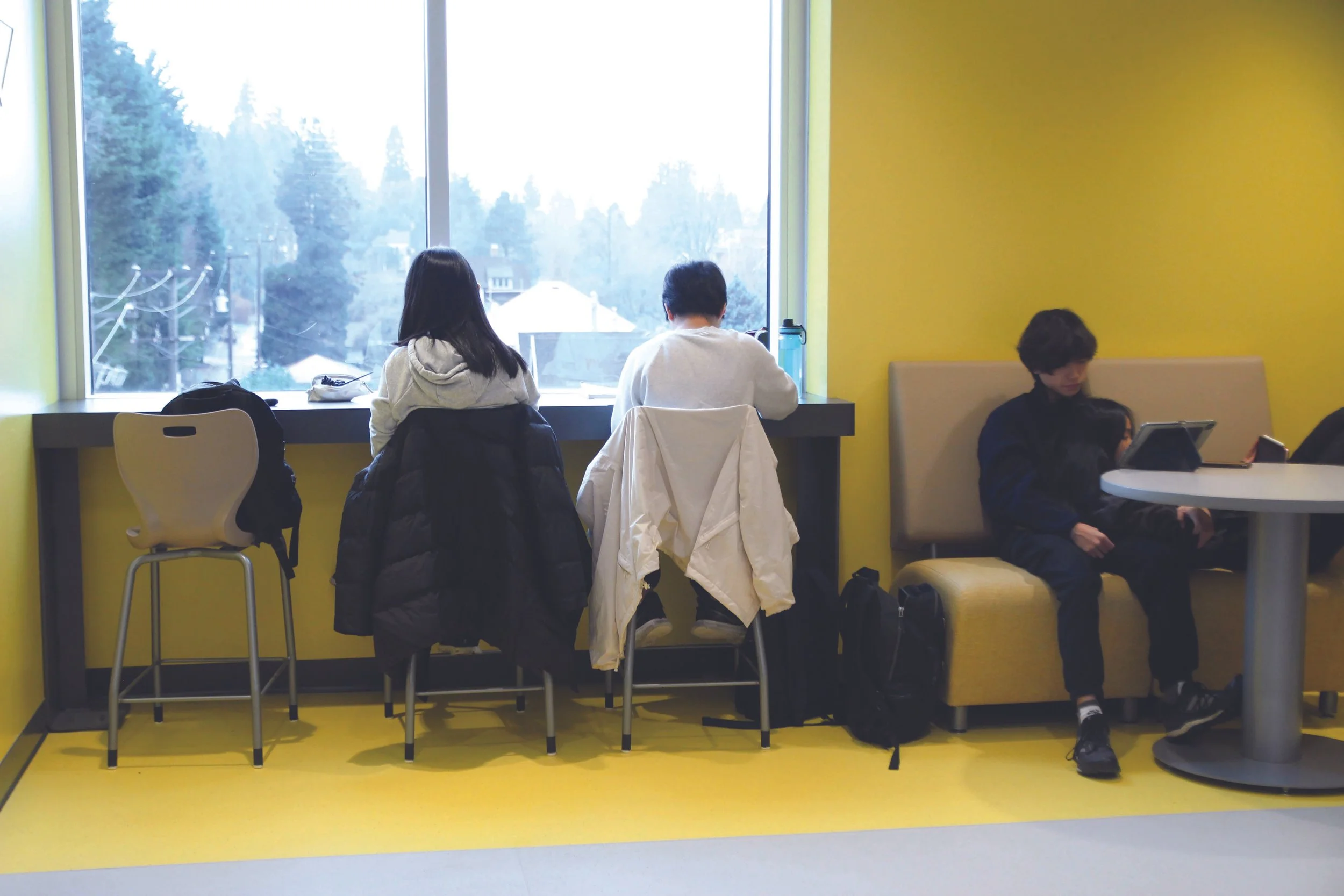
Photo Credit: Mackenzie Chung
It's the last week of semester one, and everyone is coughing.
Half of the students are in the throes of illness and the other half are next. Everyone collectively wishes they were at home, but alas, there are tests to be taken, presentations to be completed and assignments to be handed in. This is no time to be weak and succumb to the most natural of human afflictions. Staying home means admitting defeat — and taking an academic hit during one of the most crucial periods of the year. Even teachers are coming to school sick, because that lesson plan won’t teach itself. To many, this is just how it has to be; academic gain requires personal sacrifice. But hidden behind every disposable mask and poorly concealed coughing fit is a toxic mindset that our education system has instilled in us.
While our education system outwardly “encourages” students to stay home when ill, this isn’t supported by the protocols and systems that are currently in place. Due to a lack of e-learning infrastructure, an extreme diversity in teacher mindsets on absence guidelines, academic value being placed on attendance, and the semester system, students are almost always penalized, either overtly or indirectly, for missing school, even if it is warranted for health reasons. Indirectly, and most importantly, learning is deeply impacted by being absent as students miss crucial lessons and the opportunity for immediate aid and feedback, leading to gaps in curriculum and difficulty catching up on work and ultimately resulting in poorer academic performance and feelings of burnout, confusion and overwhelm. Absences can also result in grade penalties for late work or missed assignments and tests.
This leads the majority of students to come to school sick. They don’t really have a choice. Since students can’t exactly schedule their illness for weekends and breaks; they are forced to compromise their health in order to prioritize academic results. Although these systems are allegedly in place to combat chronic absenteeism in school, they end up doing more harm than good by blindly punishing any student absence, regardless of reason. While most students can admit to occasionally faking illness to get out of taking the beep test or writing that essay, justifiable absences taken out of medical necessity are much more common than the rampant truancy that our school systems use to justify penalizing student nonattendance. And it's not like the VSB is unable to create solutions to accommodate absent students, because we all saw how quickly they adjusted to online learning during the COVID-19 pandemic — which our education system clearly did not learn any lessons from because we still have the same attendance policies, and same static workload.
A self-fulfilling prophecy has emerged from the post-pandemic failures of our education system, where students who attend school while ill, due to academic pressure, end up spreading their illness to their peers, who then find themselves in the exact same situation — where being sick is something they can’t “afford.” This fosters an individualist environment inside our classrooms, where it’s everyone for themselves. If you miss school due to illness, you will fall behind. So you disregard everyone around you and attend class when sick, so you can prioritize your success (wearing a disposable mask and then coughing all over everyone doesn’t exactly count as considering others). While aggravating for those who will wake up tomorrow with a sore throat, these students aren’t to blame for the rampant spreading of illness in schools. Our education system has established the idea, through policy and practice, that sickness is an obstacle to productivity, placing academic output over the health of its students and staff, and it has done so in accordance with the values and expectations of our capitalist society.
For the majority of students, who will become members of the working and middle class, they will have already been conditioned by institutionalized education to accept the idea that rest is contradictory to success — an idea that their future employers will exploit, because that is the only way the free-market economy will continue to function. Rest is the enemy of capitalism. You are promised that if you slave away, working endlessly and tirelessly, you will one day achieve some form of success. You must prioritize work over all else. If one rests, the whole system falls apart.
Enter “sick days”: the designated number of days your employer allows you to succumb to illness and still be paid. Because how inconvenient would it be for a corporation to continue to have to pay its employees when they are unable to produce for the company's benefit? In the eyes of the ruling class, employees have to earn the right to rest — it is not something they are automatically entitled to. In a capitalist society, your employer has the power to deny you your humanity and exploit your labour capacity for capital gain, forcing you to come to work sick.
In Canada, sick leave is legally required, but differs depending on jurisdiction and employer. Those working in federally-regulated sectors like banking, telecommunications, shipping and transportation, which make up six per cent of the Canadian workforce, earn three days of paid sick leave after working for 30 consecutive days, after which they accrue one paid day per month with a maximum of ten days per year. The remaining 94 per cent of the workforce work in provincially-regulated sectors like retail, construction, manufacturing, social services, education, agriculture, tourism, etc, where sick leave policy varies by province. In British Columbia, workers are entitled to five days of paid sick leave and three days of unpaid sick leave each year after 90 days of work. An employer can offer additional sick days, either as a part of a company policy or in an employment contract, and can also request proof of illness or injury. While our policy is better and more comprehensive than that of our neighbours to the south, who are consistently ranked last in sick leave policy among developed nations, sick leave policy in Canada remains insufficient, inconsistent and is a gaping hole in our country’s social safety net. We still live in a country where workers feel compelled to come to work sick because they need to in order to make a living and get ahead, regardless of the impact it may have on the health of colleagues.
Capitalism thrives by positioning workers against each other, so they turn their attention off of the system that continues to benefit off their degradation. The same goes for our education system. The imminent need to get ahead drives students to blame each other for getting sick, rather than the system that makes it impossible to prioritize one’s health. Hate the game, not the player. In a capitalist system, it is not strategically advantageous to make decisions that benefit the collective. Skipping school when you are sick, so you don’t spread your illness, may positively impact your peers, but the negative personal impacts will likely outweigh this. In social democracies like Sweden, Norway, and Iceland, collective decision making is prioritized, and this impacts sick day policies. By allowing everyone the time and resources to take care of themselves, the collective benefits substantially.
In Finland, which has been ranked the happiest country in the world for the last eight consecutive years, workers receive full pay for the first 10 days of an illness. After the first 10 days, they can apply for sickness allowance through Kela, the Finnish government’s social security agency, which covers a portion of one’s income for up to 300 work days. Denmark, which was ranked the second happiest country in the world by the World Happiness Project in 2025 and third for education by the World Top 20 Project in 2026, requires that employers pay full sick leave for the first 30 days of an illness. After this, the municipality will cover employee pay for up to 22 weeks in a nine month period. In Switzerland, which was ranked in the top 10 for global happiness, health, education and life expectancy in 2025, has a GDP of $1 trillion and whose citizens have a higher average net worth than anywhere else in the world, the majority of employers have sickness benefit insurance for their employees, which covers 80–100 per cent of one’s salary for 720–730 days of illness over a 900 day period, according to the Swiss government. If your employer does not have sickness benefit insurance, they must pay your full salary for a period of time, which starts at three weeks for the first year of employment and increases with each year of service.
These countries demonstrate that employee health and humanity do not have to be sacrificed for innovation and capital gain, and that capitalism can function without the exploitation of workers. Comprehensive social safety nets lead to a higher quality of life for all, as well as increased rates of happiness, health and life expectancy. So what’s stopping us from implementing them in the workforce? Not surprisingly, having a healthy, rested workforce who don’t feel pressured to work when sick is not beneficial to the ruling class, who have been able to maximize personal profit to the detriment of employees. Redistribution of the corporate wealth structure erodes the power dynamic that the one per cent has historically used to exploit its workers. Simply put, when people are weakened, they are easier to control. Not only would a societal rest reset increase productivity in the workplace, as workers would be more engaged, efficient, and therefore, innovative, it would also greatly impact our education system by modelling work-life balance.
While adapting to a more flexible learning structure would require time, resources, and input, it would benefit students by allowing them to attend to their health and their education, without sacrificing either. It would allow students the right to be human, rather than simply future pawns of capitalism.