
SPECIAL REPORT: Stakeholders Weigh In On Board Operations At The VSB
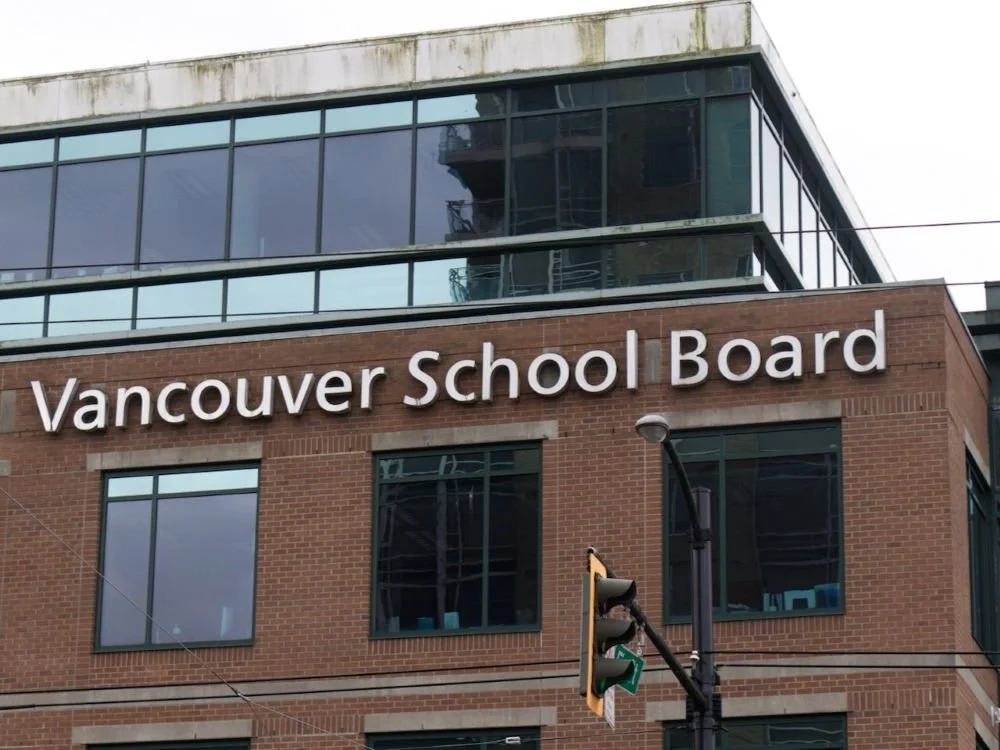
Photo Credit: Shutterstock via The Tyee
While most of the Vancouver School Board (VSB)’s over 50,000 students and 10,000 staff may be unfamiliar with Board Policies 7 and 8, they are the primary guidelines for how the board interacts with the public. These two policies govern tools of transparency, from public meetings to delegation requests to meeting recordings.
In November 2024, OneCity Trustee Jennifer Reddy introduced a board motion regarding “Democracy, Accountability and Public Participation at VSB Board and Committee Meetings.” She wanted to make the workings of the school board more open to public scrutiny and input, but other trustees said the motion brought about an overpoliticization of the issue and was too large to be successfully implemented.
Nearly a year later, in October 2025, trustees adopted changes to two of the key board policies that influence how the school board functions: Policy 7 Board Operations and Policy 8 Board Committees. These motions brought about multiple changes in how the VSB’s Board of Trustees and its four standing committees operate.
To better understand stakeholders’ views on the VSB’s rules regarding transparency and public engagement, The Nest spoke with current and former stakeholders and decision makers at the Vancouver School Board (VSB), including a former superintendent, a former board Chair, five out of nine current school board trustees, secondary students, and a former District Parent Advisory Council (DPAC) chair.
Asking Questions at Regular Board Meetings
The VSB hosts regular board meetings once a month on a Wednesday at the hour of 19:00 for “the Board to conduct its business” and provide updates on student learning and delegation, as per VSB Policy 7. All regular board meetings are open to the public.
Typically, at every regular meeting, 30 minutes are allocated towards a “Public Question Period,” with time extensions granted by the board if needed. Each member of the public is limited to asking one question to the Chairperson about any matter regarding Board business.
COPE Trustee Suzie Mah shared that in the past, all regular board meetings were done in-person. However, when the COVID-19 pandemic hit, the VSB switched to online meetings. Nowadays, members of the public can choose to watch meetings from home or attend meetings in person. However, whether an attendee is online or in-person, they must submit their question in writing through an online form during the first half of the board meeting.
Mah believes that those who attend meetings in-person face unfair obstacles that hamper their ability to ask a question. She explained that since in-person attendees are told to silence and power off their personal devices at the beginning of board meetings, it becomes impossible to submit a question with their device.
Reddy believes that the timing of the Public Question Period is flawed. “Right now, you have to submit your questions by e-mail after business has concluded and after decisions have been made,” she said. “This is really risky in my view, because [trustees are] actually only hearing perspectives after [they’ve] made the decision, and the idea is to make informed decisions.”
Former VSB Superintendent Steve Cardwell, who, as of April 28, is running for OneCity’s nomination for school board trustee, shared that over the past few years, there has been a “gradual change” in how people can engage with the board. “In the past, the public would be able to express their concerns with the board on a more timely and regular basis,” said Cardwell. “They were able to speak through a microphone that was set up for them [to ask questions].”
Since 2022, Mah says that the board chair has been summarizing the general topic of submitted questions, instead of reading the question out loud word-for-word.
“I see that as problematic [...] and I believe that is stifling what the public should know about, and how they should be able to participate,” Mah said.
But former VSB Chairperson Patti Bacchus had a different experience answering questions from the public. “I would read directly from the forms submitted with questions,” Bacchus said. “Now they seem to get filtered through staff, and the questions are often reworded.” She added that a question she submitted a while back for a regular board meeting “was completely changed when it was referred to.”
Mah believes that the current system for asking questions during public board meetings has led to inconsistencies and vague responses.
“What I have found out is that some of the people who have asked these questions and submitted questions, the responses given have been generic, and in some cases, the question was not even answered. To me, that's wrong.[...] if you ask a question, actually, what should happen is the question should be read out in its entirety. And then the answer should be, you know, said.”
VSB Communications declined to comment on Mah’s claim.
Current VSB Trustee Christopher Richardson commented that chairs are elected by the board, and if they show bias towards questions being proposed, it’s a situation the entire board must deal with and account for.
Restrictions Related to Recording Meetings
In accordance with VSB Policy 7, attendees are prohibited from taking video or audio recordings of regular board meetings. Additionally, the Board, through the Board Chairperson, “reserves the right to request that any unauthorized recording of Board proceedings be stopped immediately.”
When Cardwell attended a regular board meeting on Oct. 29, 2025, as a member of the public, he said that an amendment was typed on the screen that included revised wording and changes to the text, which made it difficult to read. He took a photograph with his camera so he could zoom in and look at the amendment.
“Before I even got a chance to look at it, the board chair called me out,” Cardwell shared. “I believe she accused me of videotaping, which I wasn’t doing.” Afterwards, they took a break, and Cardwell went up to one of the trustees to show he was just taking a picture of the board and not videotaping the meeting.
“I felt it was very disrespectful of the board chair to be taking that action with a member of the public who was interested in learning what was going on at the meeting,” Cardwell shared, emphasizing that he believes the public should be able to take photos at these meetings.
VSB student Samuel Chu (10) had a similar experience to Cardwell. Chu was aware, based on Policy 7, that video and audio recordings were prohibited at meetings, but believed that taking photos would be allowed.
When asked for comment, VSB Communications shared that “signage is posted at the entrances to the Board Room noting that filming, recording, and photography are not permitted.” However, the words “photo” or “photography” do not appear in VSB Policy 7.
At the Nov. 24, 2025, in-person public delegation meeting, Chu took a photo while the meeting was in session. “I wasn’t taking any sneaky photos [...] I wasn’t singling anyone out [or] zooming in on random people and taking photos,” Chu said.
After he took a photo, Chu shared that the Chairperson said out loud that he must follow the policy; however, Chu was confused because he was not recording the meeting.
Then, the Chairperson came up to Chu and told him that if he did not stop taking photos, she would declare a recess. “At that point [...] I just realized, this is now or never, right? I can’t really feel intimidated by this,” Chu said.
Chu took another photo, and then the Chairperson called a recess. Reflecting on the meeting, Chu shared that he “felt a little embarrassed, maybe pretty [...] humiliated.”
“I thought the school board would be more open [...] and more chill, because we’re students, right? We’re just coming here, doing our thing,” Chu added.
Bacchus, who attended the same meeting, shared that she was surprised by the way that the Chairperson spoke to Chu. “Why would anyone want to come here and be treated in the way the public was being treated in that meeting by the chair of the school board? I was quite shocked and very disappointed,” she said.
VSB Communications declined to comment on the situations regarding Cardwell and Chu.
Former DPAC Chair Melanie Cheng, speaking as a Vancouver parent and not on behalf of any organization, believes that the rule regarding photography is applied inconsistently. “If there’s an event, like a celebration, they are welcoming pictures, but if there is a contentious board motion, then they are limiting it,” she shared.
As well, Bacchus believes that it is “absurd” that participants cannot take photos at public meetings. “There's a reason for local government meetings to be held publicly, for transparency, and there's a reason we have locally elected boards, and that is to engage locally and represent local voice in decision making,” she said.
According to ABC Trustee Preeti Faridkot, one of the biggest reasons for creating the policy was due to privacy concerns for students, teachers, and staff.
“We still have to understand we're in a student setting,” Faridkot said. “And, you know, especially these types of places, if recordings are shared online and are misused for any reason, it can actually lead to harassment, bullying, or threats.” Faridkot believes that there is no issue with video recordings of board members at meetings, but recordings of staff and students could lead to issues for the VSB.
Additionally, Vice-Chair Janet Fraser, a member of the Green Party of Vancouver, shared that it can be very distracting for trustees to have several people holding up cameras. She said that because their meetings are already recorded and livestreamed for public viewing, members of the public can refer to the official recordings instead of recording the meetings themselves.
Private Board Meetings
According to VSB Policy 7, the Board conducts private meetings “to consider matters that require confidentiality due to legal, privacy, or operational sensitivity.” Some stakeholders, trustees, and parents have voiced concerns over the number of private meetings held by the VSB and the topics being discussed at these meetings.
Bacchus warns that the board’s ability to hold private meetings can be “a very slippery slope” and that it is “very poor governance to overuse that [power].”
Similarly, Cheng is concerned about the type of decisions being made behind closed doors. She shared that the decision to close Carleton Elementary was made “prior to public consultation,” even though decisions regarding land usage and school facility planning have historically been open to public debate.
“Essentially, the plans are pre-done, pre-determined, pre-made, and then when they do go to public consultation, it's merely a rubber stamp or performative and checking a box,” Cheng noted. “For the Carleton engagement, parents were literally told that the consultation was just a formality, essentially, and that they anticipated a closure of the school.”
Mah corroborated Cheng’s statement. She shared that, according to school board policies, board discussions about school closures and property are expected to be held in private. Therefore, when the closure of Carleton was brought up at a public meeting, the public was not told what was discussed in any private meetings; they were only told the outcome of those talks.
Mah also shared that the board has so many more private meetings compared to regular board meetings. “I would say we’re now probably at close to 70 per cent of all the meetings that we run are in private,” she said. “And that's problematic because the public knows nothing about what we're talking about.” VSB Communications was unable to verify this figure.
Meanwhile, Fraser shared that private meetings are critical for discussing certain matters that cannot always be disclosed to the public. She mentioned that over the last few years, the board has had to deal with “quite a few legal matters.”
“Normally, you have one private meeting a month [... but] sometimes decisions need to be made, and it's not always once a month. Sometimes, the court makes a ruling, or the lawyers need instructions,” Fraser said.
Cardwell agrees that if the issue is a personal matter or a contract being negotiated with a company, it is “fair enough” to have it as a private meeting.
However, Cardwell argued that “far too many” meetings were being held in private “over the term of this particular board,” and questioned the decision to close them off from the public. “What else is going on behind closed doors at the VSB that they need to have so many private meetings and not allow the public to be a part of those discussions, to listen, or to be a witness to the discussions that are taking place?”
Faridkot agreed that the VSB is increasing the amount of private meetings held, clarifying that “these private meetings are being set up by the senior management and the chair and the vice-chair. The trustees have no say in it.”
Richardson contradicted Faridkot’s statement about trustees having no say in private meetings.
“There are accusations that somehow we’re talking about a whole lot of things in private,” he told The Nest. “All the trustees, if they attend private meetings, have an opportunity to challenge and say that the matter should not be discussed in a private session.”
VSB Policy 7 outlines that “trustees wishing to raise issues concerning the appropriateness of a private meeting, or to seek the disclosure of information discussed in private session must, where possible, provide the Chairperson of the relevant meeting with reasonable advance notice of their intentions in this regard.”
Cancellation of Public Delegation Meetings
Once a month, typically at the hour of 17:00 on a Monday, the VSB holds public delegation meetings where members of the community have the opportunity to speak to the board regarding policies, decisions, and proposed budgets. Those interested in speaking at such meetings must submit a request “in writing to the Secretary Treasurer’s Office stating their name, the matter they wish to bring before the Board and a copy of the brief and/or presentation they intend to make,” as per VSB Policy 7.
Furthermore, “no Board business, other than the receipt of public delegations, shall be conducted at [a public delegation] meeting and as such, no matter raised by a delegation shall be considered at this meeting.”
Christopher Lee, a high school student and founder of the Helping Hearts Youth Foundation, applied to speak at the Sept. 29, 2025, delegation meeting. Lee is currently running for a school board trustee nomination with OneCity, but this was unannounced at the time he sent in his delegation meeting application.
Lee shared with The Nest that he requested to speak to the board about a decline in transparency at the VSB. However, the Friday night before the meeting, on Sept. 26, he received an email from delegations@vsb.bc.ca stating that the meeting “had been cancelled due to the low number of delegation requests received, and presenters confirmed.” According to Lee, two other members of his Helping Hearts team had also signed up for the delegation meeting, as well as another parent.
The email also informed Lee that the Board Chairperson had approved his delegation request and that an Ad hoc committee had been set up to review the policies that he had brought up. According to VSB Policy 8, the Board “may establish subcommittees and ad hoc committees of the Board when necessary to assist the Board in fulfilling its governance functions.” Lee was offered the opportunity to meet with the Ad hoc committee and was told that he could speak at the public delegation meeting held on Nov. 24, 2025.
However, he later received another message stating that he could instead speak at the meeting in October. Lee shared that they told him he had one day to confirm his participation and review 20 pages of changed policy to verify that he had something to talk about at the meeting. This meeting took place on Oct. 27 with Lee as the sole delegate, as others who previously signed up were unable to attend.
“Frankly, it was a joke,” Lee said. “It doesn’t really make sense to me how four people signed up at the mid-September one, but [only] one person spoke at this one.”
VSB Communications declined to comment on why the September meeting was cancelled, while the October meeting proceeded.
Richardson, however, believes that Lee should have more “trust” in the board, and assume that it was in Lee’s “best interest” that there was no meeting on Sept. 29.
Furthermore, Richardson said that he believes that Lee “mischaracterized” his experience. Richardson took issue to the fact that during the Oct. 27 meeting, Lee said that he was refused a meeting with the Board on Sept. 29. Richardson thought Lee’s comment was “out of context,” because he “made no mention that he was given the opportunity to speak to two or three of the [ad hoc committee trustees]” but turned it down, which Richardson thought was “a little bit disingenuous.”
In response to Richardson, Lee said that “secretive, non-public, un-transparent ad-hoc committees are not a reasonable space for public input.” He added that the offer to meet with an ad-hoc committee was yet “another extension of the growing reliance of the current School Board on untransparent structures,” and was a clear example of his previous concerns about a decline in board transparency.
Moreover, Reddy shared that delegation meetings are “frequently cancelled.”
“Conservatively speaking, maybe every third one is cancelled,” she said. “So out of a school year, you're only going to be getting maybe six total.” VSB Communications was unable to verify this figure.
Mah shared that she believes that if you have one presenter, the meeting should still proceed, as the issue could potentially be timely. “When you deny that, you're basically saying to them, you're not important, and we're going to put you with the others when we have enough,” she said.
Cardwell echoed this statement. “It doesn’t matter if there's one or 50 voices. The board should make accommodation for public engagement,” he shared. He recalled that during his time with the board, he would have full gymnasiums of parents speaking about issues that they thought were important, often with regard to the school budget. Now, Cardwell has noticed a decrease in engagement when the board is discussing matters such as the budget.
“I think pushing off these opportunities to speak to public delegation meetings and then cancelling them or moving them so it's not convenient for people, I think it is wrong,” he shared.
Upon request, VSB Communications was unable to provide further insight into how decisions are made regarding the cancellation of delegation meetings.
Applying to Speak at Public Delegation Meetings
To speak at a public delegation meeting, a member of the public has to fill out an application form and wait to be approved as a delegate.
Cardwell believes it is “a little draconian” and “a little bit unfair for the public to have to navigate forms to be able to speak to a board that they have elected, who is responsible to the larger community.”
Faridkot also believes the procedure to receive a public delegation meeting should be “more lenient,” sharing that the VSB has “very closed doors.” Even at City Hall, she added, members of the public can sign up on their website to speak at a public board meeting without disclosing whether they are speaking for or against a certain matter.
Faridkot is “surprised” that the VSB, on the other hand, only allows speakers whose topics and presentation materials have been pre-approved. She proposes that the system should be changed so that if someone wants to speak at a public delegation meeting, all they need to do is sign up, so the Board knows how many people will attend.
However, Fraser shared that it is necessary for potential presenters to apply and be approved before speaking at a delegation meeting. “As a board, we are responsible for what happens in the boardroom,” she explained. “And so it's important that people who come to speak understand the context in which they're speaking. And we have to ensure that they're respectful of the values of the school board.”
She added that City Hall has a different system from the VSB because while the Board has a set agenda so that the public can see who is speaking, “City Hall does not have a [set] agenda when they do public hearings,” Fraser said.
According to VSB Policy 7, only the VSB Chairperson can approve whether a delegation can present to the board. As a result, the other trustees are not informed about who has applied to speak at a public delegation meeting. Faridkot disapproves of the fact that the Chair and Vice-Chair are the only ones who receive that application information and decide who is invited to speak.
“Right now, our system is not transparent. Many people think that all the trustees get all the information. [But] many, many times, the trustees are in the same position as the public,” Faridkot said.
According to Reddy, the board chair’s ability to approve or deny delegation requests is an “overtake of the role of the chair that the board doesn't agree with, necessarily.” From interactions with community members, Reddy has noticed that they are left feeling that their concerns don’t matter when their delegation requests are denied.
Oftentimes, Reddy said, the rationale given for denying a delegation request is that the issue being presented is too specific to a certain school, or doesn’t relate to school board governance or budgetary matters. For instance, according to Reddy, delegation requests related to concerns about school field access were denied because the issue wasn’t related to governance.
Another reason why the Chair won’t approve an individual’s delegation request is if the board has already heard that individual speak about their desired topic. In that case, the individual will only be allowed to present again on that topic after the current board completes its term, which typically lasts four years.
Faridkot objects to this rule. She wants the system to change so that “you can come and speak to the trustees, the board, the staff, on the same topic over and over again.”
Richardson counters that this one-shot system plays a central role in keeping the VSB organized. “How many times would you say you'd allow someone to speak on the same issue before it's like, okay, you've had your chance to speak?” said Richardson.
Richardson added that delegates are free to reach out to him by email or by phone call if they feel unsatisfied or have new ideas to share before a vote. “So, to suggest that we're somehow being undemocratic and restricting comments [...] the reality is there are plenty of opportunities to communicate with trustees.”
Furthermore, Mah finds other aspects of public delegation meetings problematic.
She worries that “if your English is not that great, it’s hard to fill out a form,” which excludes weak English speakers from applying to attend public delegation meetings.
Additionally, Mah finds it problematic that there is no appeal process if your request to speak is denied. “If you get rejected, you get rejected. I think that’s problematic, because if you’re being rejected, you should be told why.”
Finally, Chu believes “the process is really convoluted and you have to write this whole letter. Sometimes it takes too long or sometimes you don't even get allowed to be a speaker at all.”