
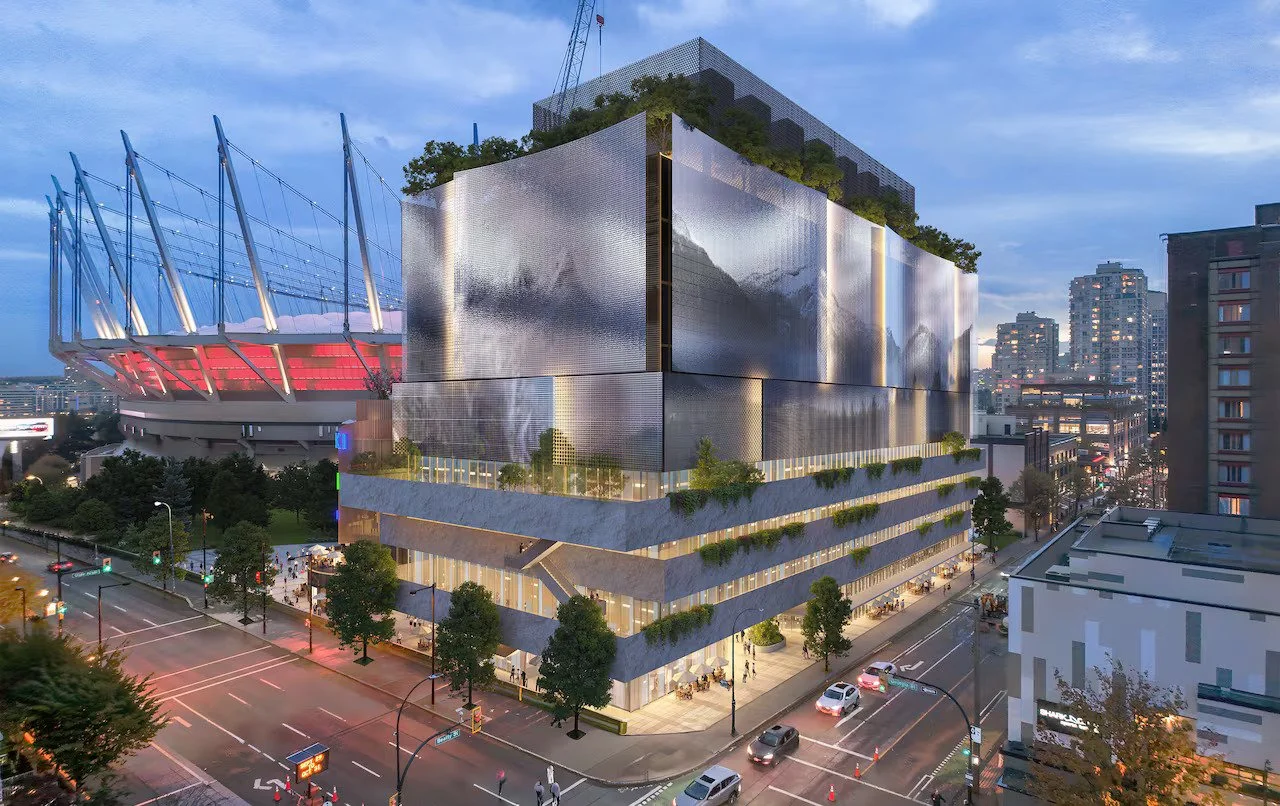
Photo Credit: Telus via CBC
On May 11, Telus announced plans to construct BC’s first cluster of major AI data centres. Together, the data centres are projected to require approximately 150 megawatts of electricity at full capacity by 2032, equivalent to a continuous annual consumption of about 1.31 terawatt-hours, if operated at that level year-round.
This amount of electricity could power approximately 130,000 BC homes, according to data from BC Hydro. Data centres that have already started construction have been projected to be finished by late 2026 to early 2032.
The federal government and Telus have begun advancing plans for the proposed data centre cluster as part of Canada's efforts to develop its own AI infrastructure.
Minister of Artificial Intelligence Evan Soloman says that the aim is to make sure that “Canadian innovators, researchers and businesses have access to the compute they need,” while keeping “Canadian data, intellectual property and economic advantage on Canadian soil,” as per Digital Journal.
The construction of the AI data centres would open up thousands of new jobs for construction workers and tech industry professionals in BC, according to Telus. Workers with steady income would support local businesses because they would spend more money on restaurants and shops, strengthening the local economy, the company says.
In a statement, Telus said that its data centres will “ensure B.C.’s businesses, startups and research institutions are first in line for the most advanced AI capabilities available,” according to The Province.
However, AI data centres may also put strain on the province’s resources.
AI data centres can place heavy demands on energy infrastructure, according to The Tyee, raising questions about how BC will accommodate these facilities. The plans also come at a time when BC Hydro experts warn that the province will need up to 9,700 additional gigawatt hours of additional electricity each year by 2035, which is nearly double the current output of the new Site C dam.
Cooling the data centres remains a top concern for local citizens as local water reservoirs continue to shrink, according to CTV News. As such, this May, Vancouver activated Stage 2 water restrictions to help conserve drinking water.
According to The Vancouver Sun, a grassroots organization called No AI Vancouver led a protest on May 23. Over 500 protesters chanted ‘Use Your Brain’ as a rallying cry to encapsulate their frustration with AI data centres.
No AI Vancouver has since led two more organized protests, and, as per The Tyee, City of Vancouver staff have received 579 submissions from residents about a proposed data centre on 5th Avenue in Mount Pleasant.
Torin LaRocque, the founder of No AI Vancouver, stated, “Vancouver is in the middle of a housing crisis and water shortage. These centres will use more heat and water - it seems counterintuitive to me,” according to The Vancouver Sun. LaRocque has received more than 3,500 signatures for a petition against the proposed data centres in Vancouver