
OPINION | Extra Credit: The Elitist Inequity Of Mini School Programs
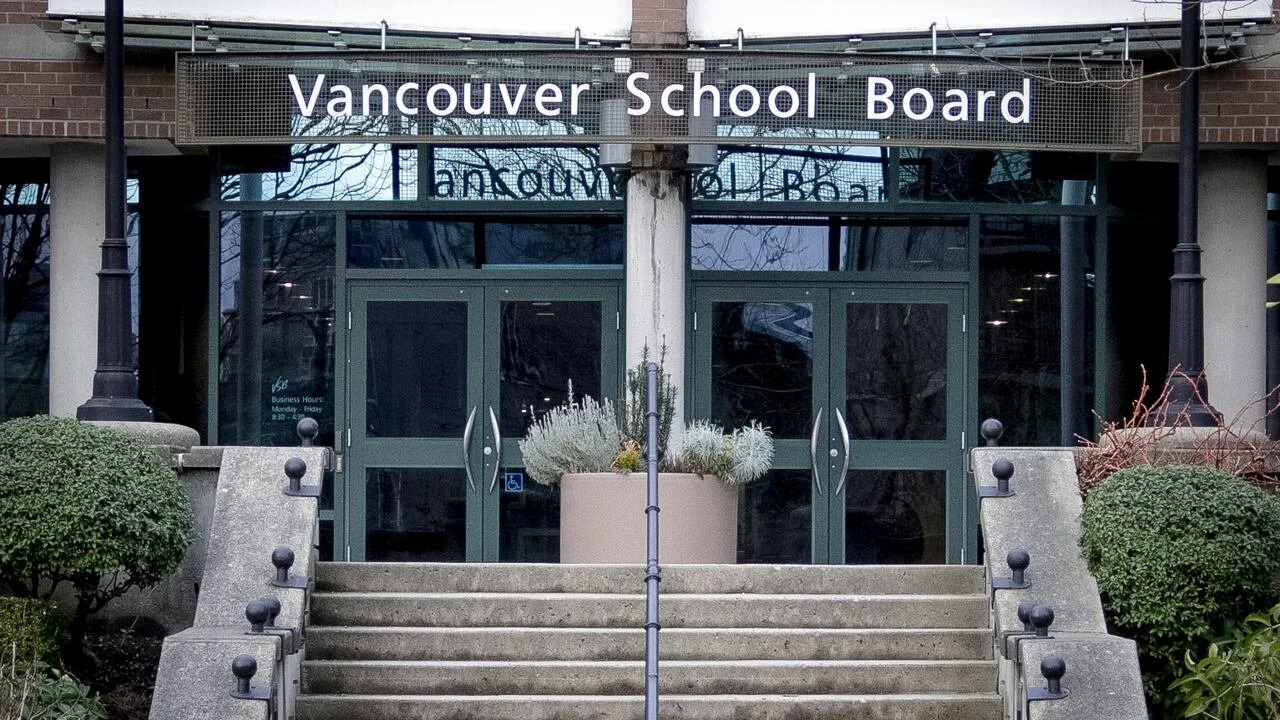
Photo Credit: Nicolas Amaya/CBC
Disclaimer: The author of this opinion column was a student of Eric Hamber’s Challenge Studio Mini School from 2021–2024.
While senior students all over the country are currently awaiting university admission decisions with baited breath, it was only a couple months ago that hundreds of 12-and 13-year-olds across Vancouver were in a similar position. They’d completed rigorous applications, crafted portfolios, and undergone intensive interviews. To many, their entire lives hinged on one result. The pressure was on. The decision they so greatly anticipated being whether or not they had been admitted to one of the city’s exclusive Mini School programs.
Mini Schools are enriched cohort-based choice programs within certain Vancouver public high schools, designed to provide “opportunities for enrichment for students who are [...] highly motivated and would benefit from a learning environment with highly motivated peers,” according to the VSB website. These programs feature a specialized and often accelerated curriculum, smaller class sizes, and a rigorous application process. As stated by the VSB website, “Each year, over 1,400 [grade seven] students apply for approximately 500 Grade 8 spaces in the Mini School Programs.” Once admitted, students typically stay together for relevant core subjects throughout high school, often having the same teachers for multiple classes. Some programs have cohorts take all courses together, while others feature a hybrid of mini and mainstream classes. Depending on the program, each Mini School has its own specific acceleration focus, such as the Fine Arts Program at Lord Byng Secondary; the Ideal Mini at Winston Churchill Secondary, which teaches social responsibility and leadership; or Eric Hamber’s Challenge Studio Program, which focuses on the humanities and critical thinking.
In theory, these district programs are an excellent way for students with specific interests to access an enriched curriculum that meets their abilities, motivation levels, and academic needs, while also widening the scope of public education to include those that would otherwise be overlooked by a “one size fits all” system. But in reality, VSB Mini Schools don’t work in the way they’re intended to. Fundamental flaws — caused by the system’s structure and design, the elitist and exclusionary ethos of individual programs, and the evolution of these programs’ reputation and status — render Mini Schools counterproductive and ineffective.
Most problematically, academic Mini programs foster deep-rooted intellectual elitism. Through consistent rhetoric and special treatment, educators indirectly create an us-versus-them dichotomy, which can result in students developing superiority complexes. By segregating intellectual classes, Mini Schools effectively act as echo chambers; students spend their entire high school career surrounded by the same people and taught by the same teachers, which prevents them from encountering and contextualizing diverse perspectives. The insular nature of these programs can enforce a sense of homogeneity and conformity within cohorts that further entrenches the marginalization of the mainstream population. Mini Schools are essentially built on the idea that being around people of mixed skill levels somehow detracts from or harms the learning of those who work at a more advanced level, and that those at a higher skill level are more deserving of a greater-quality education. This sentiment is inherently divisive and harmful to the greater school culture and community, as it ingrains already inherent divisions between Mini School and mainstream students.
Some Mini School students not only have access to an enriched curriculum and accelerated classes, but also numerous additional opportunities and leisure events that serve no real educational or enrichment function. Eric Hamber’s Challenge Studio Program, for example, has hosted events such as pumpkin carving, game nights, Secret Santa, beach parties and lunch time sports, according to their website. The Prince Wales Mini School travels yearly to a ski resort for one of their “enrichment trips,” as stated by their website. These parties, camps, and trips — often justified as “necessary” for team-building or cohort bonding — go beyond the actual purpose of the program, essentially giving special treatment to high-achieving students, which those in the mainstream can clearly see.
This preferential treatment is greatly divisive in school communities by causing mainstream students to resent the Mini cohort. By so overtly favouring and rewarding Mini pupils, program educators are committing a grave disservice to all students, clearly demonstrating another way that Mini Schools have drifted from their original mission.
While the VSB’s Mini School system was created in the 1970’s by parents and educators to satisfy the unmet needs of high-achieving students, it has since evolved into a status symbol for academic superiority, likely influenced by the socio-economic demographics they serve.
Jennifer Katz, a special education expert at the University of British Columbia, told The Globe and Mail that specialized education programs are “almost always” made up of “middle- and upper-class kids whose parents have had them tutored for who knows how many years. And so you’re really streaming kids by socio-economic status.” While these programs continue to serve their intended demographic — students who desire enrichment — they now also attract families who simply want to reap the superficial benefits, like the bolstering of one’s resume and post-secondary prospects.
Due to the now widespread idea that being a part of a Mini program gives students a leg up on their mainstream counterparts, and is a predictor of future academic and professional success, some parents push their children into applying, forcing them into a specialization before they have had the chance to figure out their interests. Others hire consultants to help craft their applications, assemble their portfolios, or prepare for interviews.
As the reputation of the Mini system has grown, its application process has inherently become more inequitable. How can a student whose family can’t afford tutors, or impressive extracurricular activities to embellish their resume, or coaches to help them craft their application, compete with students who do? Are Mini Schools looking for applicants to demonstrate their abilities and interests, or simply their access to resources? If one can’t get into a Mini program solely based on their willingness and desire to learn, then the system is no longer able to achieve its goal, therefore rendering it defective.
Additionally, these status-based perceptions of the Mini programs, along with the competitive application process, place extreme amounts of pressure on young applicants who are only in the seventh grade. With many perceiving their future success as tied to getting accepted into one of these highly coveted programs, rejection can be demoralizing and undermine confidence. The scarcity of Mini School spots also forces competition between peers, leading to insecurity and constant comparison, which can have lasting impacts on one’s self-esteem. Mini Schools can also place pressure on students by forcing them to choose a specialization at such a young age, which restricts them from exploring a variety of subjects in-depth, and from gaining enrichment in areas outside their program. While some grade seven students may already know what fields they want to pursue, others may desire acceleration and enrichment alongside choice and options. Our current school system forces them to choose between challenging courses or variety in curriculum.
After getting accepted into a Mini program, the pressure only gets worse. The cohort-based approach fosters unhealthy levels of competition and comparison between peers, creating an academic hierarchy within individual programs, which is aggravated by the value some educators place on extrinsic outcomes. This can lead the system to fail the very motivated learners it was designed to support, by causing feelings of inadequacy and academic burnout.
In order to build a truly merit-based enrichment system that fosters community rather than exclusivity or hierarchy, the VSB must invest equally in each student’s potential, not just those who demonstrate advanced capabilities. As such, Mini School programs should be dismantled and replaced with individual learning pathways.
Instead of students needing to belong to a specialized program to gain access to an enriched education, opportunities for engagement and acceleration should be equitably distributed throughout the mainstream school system, allowing everyone access, regardless of academic standing, ability level, or socio-economic status. The VSB should integrate this into the mainstream curriculum by running more academic and ADST electives, and dedicating additional funding to running opt-in field trips, events, and other opportunities, so every student is able to pursue areas of interest, likely increasing overall in-school engagement and performance at all academic levels. By placing academic enrichment in the hands of the many instead of the hands of the few, it would further democratize education and allow each student to flourish.
Additionally, the VSB should prioritize acceleration opportunities over cohort enrichment programs for students who require additional challenges in specific academic subjects. According to A Nation Deceived: How Schools Hold Back America's Brightest Students, a report from the University of Iowa’s Belin-Blank Center, academic acceleration entails “matching the level and complexity of the curriculum with the readiness and motivation of the student. Accelerated students feel academically challenged and socially accepted, and they do not fall prey to the boredom that plagues many highly capable students who are forced to follow the curriculum for their age-peers.” This can be done by allowing students who demonstrate ability to skip grades in certain subjects, as well as offering more advanced courses at the senior level. Allowing easier access to acceleration pathways would allow each student to have their specific needs met, and would remove the exclusion, intellectual elitism, and siloing that occurs in Mini programs.