
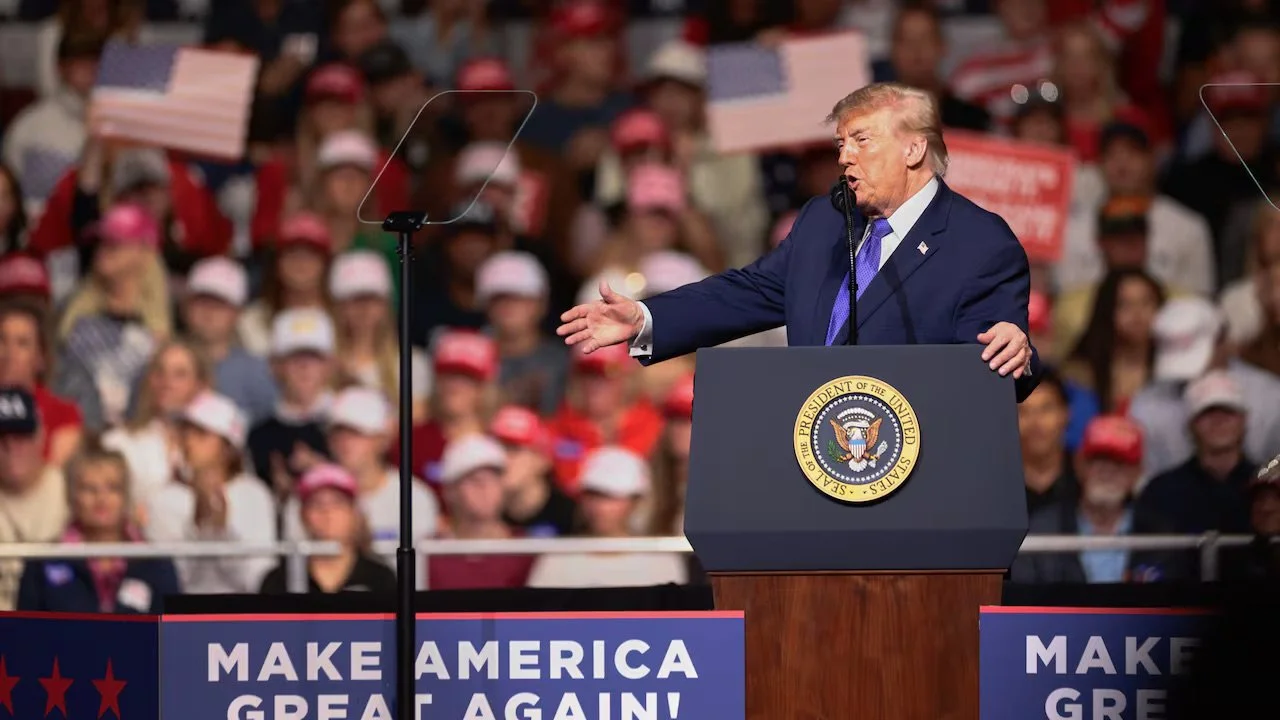
Photo Credit: Scott Kinser/AP via CBC
On Nov. 3, Americans will head to the polls to vote in the midterm elections, where one-third of seats in the US Senate and all 435 seats in the US House of Representatives will be up for re-election. As election day draws closer, Republicans and Democrats are vying for public support on key issues, such as the war in Iran, affordability, healthcare, and immigration.
The Senate and House of Representatives are the two chambers that make up the US Congress, which writes, vetoes and passes all federal laws. While the offices of president and vice-president will not be up for re-election, the midterms could redirect the current legislative dynamics by electing lawmakers who support or oppose the president's agenda.
According to BBC News, the November midterms will reflect US President Donald Trump’s performance and popularity. If the Republican Party were to gain more seats, satisfaction with Trump’s current policies would be represented. The reverse also applies.
Recent polling numbers from the Silver Bulletin show that Trump’s approval rating is declining, relative to his predecessor’s popularity. Since Trump began his second term, his approval rating has dropped from 50 per cent to 37 per cent. Comparatively, ex-President Joe Biden had an approval rating of 40 per cent at the same point in his term as president.
These statistics are further corroborated by a Washington Post-ABC News-Ipsos poll released on Oct. 18. The survey found that 52 per cent of American adults strongly disapproved of Trump.
Currently, Republicans hold 218 out of 435 seats in the House of Representatives — the bare minimum required to hold a majority government.
Trump’s falling approval rates could be due to rising living costs, especially amidst the US–Iran war. Since the war began, gas prices have increased significantly, reaching US$4 per gallon, according to BBC News. According to BBC News, a poll conducted in August found that 63 per cent of Americans disapproved of Trump’s handling of the war in the Middle East.
This comes after Trump’s 2024 election promise to “end inflation and make America affordable again.”
However, Trump has described concerns surrounding affordability as a "con job by Democrats,” and he has falsely stated that prices for consumers have decreased during this second term as president, according to CBC News.
Healthcare has also been a major topic of the debate. Throughout Trump’s presidency, over US $1 trillion has been cut from Medicaid, Medicare, and the Affordable Care Act, according to The Washington Post.
In response, many Democratic candidates have been focusing on the rising costs of US healthcare and how it has been affected by Trump’s legislation.
In a request for information, Democratic Senator Ron Wylan spoke of his party’s stance, stating the Democrats’ “goal is to make sure that the long term care system serves all people across age and disability, and across diagnoses, functional needs, and life stages,” according to The Hill.
Trump’s border and immigration policies have also prompted criticism from Democrats. Trump has recently praised his border policies as a success, pointing to lower border-crossing rates.
Others find that these policies, including the deployment of ICE, are not an adequate way to manage immigration rates. According to The Guardian, arrests related to immigration enforcement have reached record highs during Trump’s presidency.
An Oct. 4 poll by NBC News and Telemundo found that two-thirds of registered Latino voters thought that Trump’s deportation policies had gone “too far.” Additionally, more than one in four of these voters said they knew someone who had been deported or detained by ICE in the last two years, and 17 per cent said that they know someone who may not vote in person this year due to ICE activity.
Democrats have responded by proposing their own policies. On its website, the California Democratic Party has pledged to “fight inhumane treatment of undocumented individuals.” The party also promises to “demand Immigration and Customs Enforcement officers throughout the chain of command comply with all laws and [pursue] the prosecution of all those who have violated the law.”
Tariffs have also become a key issue in the lead-up to the midterm elections, with candidates expressing differing views on Trump’s trade policies, including some Republican candidates who have opposed Trump’s actions. Republican Senate candidate Mike Rogers of Michigan stated in a campaign advertisement, “Here in Michigan, we know that Canada is not our enemy. We need to end this tariff war — now.”
However, Trump has defended his trade policies. At an Oct. 23 rally in Florida, Trump said that the "tariffs" is his "favourite word" because they've "made us rich," according to CBC News.