
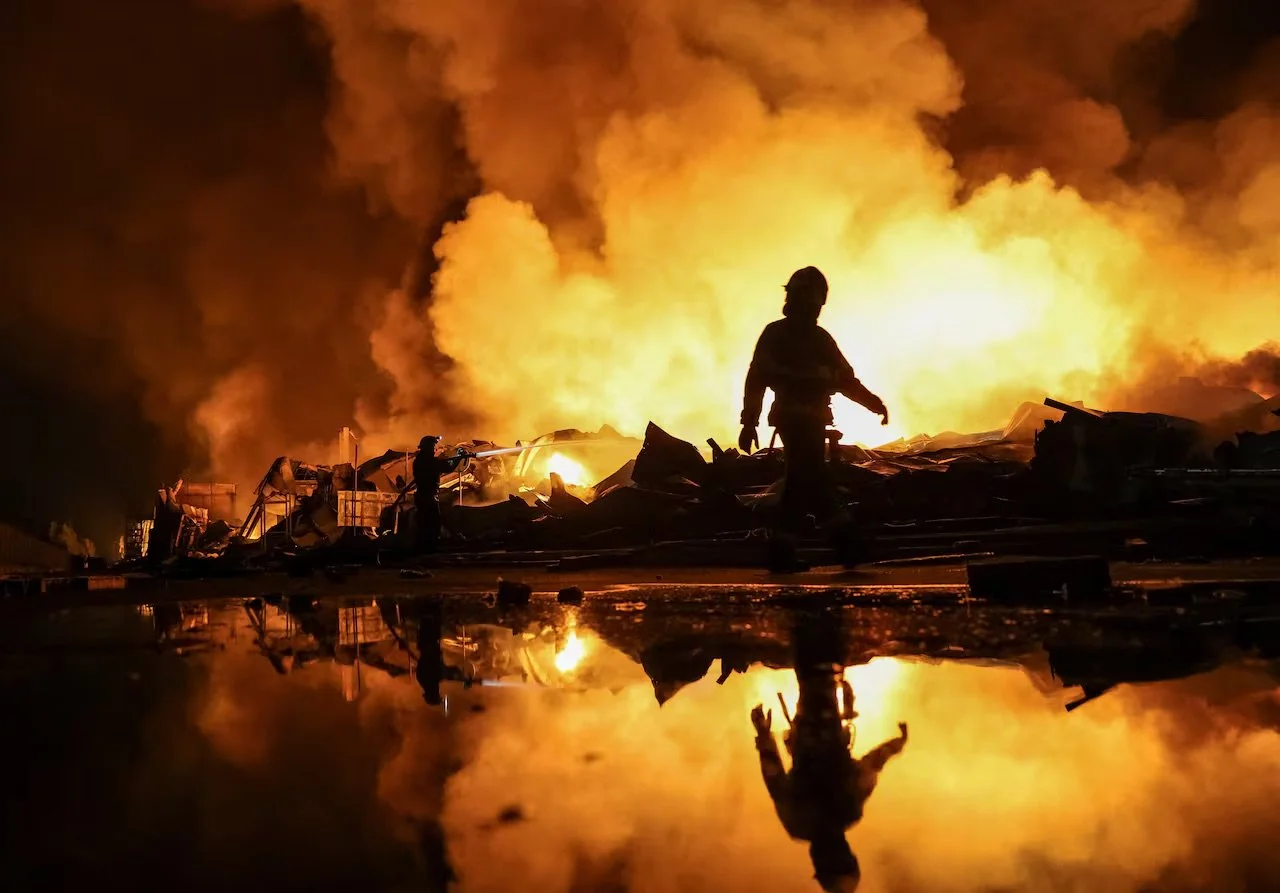
Photo Credit: Anatolii Stepanov/Reuters via CBC
Recently, the US led renewed efforts to secure a ceasefire between Russia and Ukraine. However, Russia’s continued missile strikes and tension from Ukrainian attacks on Russian energy infrastructure continue to stall ceasefire negotiations.
On Oct. 20, US Special Envoy to the Middle East Steve Witkoff met with Ukrainian President Volodymyr Zelenskyy and European leaders in Oslo, Norway. The next day, Witkoff travelled to St. Petersburg to share a ceasefire proposal with Russian President Vladimir Putin.
Zelenskyy confirmed that US-Ukraine intelligence sharing and “strong” security guarantees for Ukraine were discussed during the meeting. Meanwhile, Trump told reporters that the world was “the closest we’ve been” to ending the war in Ukraine, as per The Guardian.
However, hours after receiving the proposal, Putin's aide Yuri Ushakov characterized the proposal as not “useful.” Later that day, Kyiv came under a new Russian missile strike that injured six people, according to Kyiv Mayor Vitaliy Klitschko.
Ushakov told reporters that Russia remained open to future peace discussions, and suggested that a new round of peace discussions occur around Nov. 10 in Abu Dhabi, the capital of the United Arab Emirates.
According to Reuters, this was the first time since February that Russia sat down to peace discussions, and the discussions may have been triggered by US diplomatic efforts to import Russian diesel to lower prices for Americans. The surge in global diesel prices that followed the February outbreak of war in Iran has become a political liability for the Republicans, prompting them to seek import options from Russia.
On Oct. 9, Trump surprised US allies by announcing a new diesel deal with Moscow, according to the Council on Foreign Relations. After Trump lifted some US sanctions on the country, Russia agreed to supply more than 300,000 metric tons of diesel to the US and global markets.
According to The New York Times, Trump explained that “It was agreed that Russia will immediately supply over 300,000 Tons of Diesel Fuel to the American and Global Marketplace, another 500,000 Tons during the month of November, and 1,000,000 tons immediately thereafter.” He added that based on the conditions of the diesel refineries, Russia will then deliver a total of approximately 3,000,000 tons of fuel.
Hours later, a Ukrainian drone strike set a fuel facility in Russia’s Rostov region ablaze. According to local authorities, over 100 drones targeted the area, setting fire to the loading terminal of the Novoshakhtinsk oil refinery.
The targeted strikes by Ukraine on Russian oil refineries could lead to price increases for US consumers, and they drew criticism from Trump, who suggested to reporters on Oct. 10 that it was time for Zelenskyy to step down.
"I think it's time for Ukraine to get a new president," Trump said, according to Al Jazeera. "[Zelenskyy] wants to make problems for our farmers, our ranchers, with diesel fuel because Russia supplies a large portion of the diesel fuel throughout the world."
Zelenskyy pushed back, noting that Ukraine received no intelligence warnings from its partners regarding the wave of Russian ballistic missile strikes on Oct. 14, and that Starlink satellite communications had been critically delayed.
“Once again, Russia launched a ballistic missile attack in multiple waves throughout the night, and once again, there was no warning from our partners,” Zelenskyy posted on social media, according to The Guardian.
Several media outlets — including CNN, CBC News and the Financial Times — reported that US officials threatened to cut off intelligence sharing and weapons sales to Ukraine if Kyiv does not halt deep strikes on Russian energy infrastructure.
However, according to Reuters, US Secretary of State Marco Rubio firmly denied these reports, stating, "I don't know where [Zelenskyy is] getting these things or why he's saying these things to the press [...] There's been no pause.” According to BBC News, he called the accusations “scandalous.”
On Oct. 11, Trump took to Truth Social to announce an energy ceasefire between Russia and Ukraine. According to Reuters, he posted, "Effective immediately, there is an ENERGY CEASEFIRE in the War between Russia and Ukraine. Both parties have agreed. Do not break it!"
Zelenskyy said that he had not been consulted prior to this announcement, but he agreed to stop if Russia did. However, hours later, Russia bombed a series of Ukrainian power plants. Ukrainian officials say residents in Kharkiv and Kyiv were left without heat and hot water after Russia's drone attacks on power and gas facilities. Additional blackouts were caused in the city of Izyum after a Russian strike destroyed power grids, according to Ukraine’s state news agency Ukrinform.
After these latest attacks, which Zelenskyy said violated Trump’s ceasefire, both nations resumed bombing.